The Vietnam flag is one of the most well-known national flags in Southeast Asia. Its red field carries a single yellow star. Behind that simple design lies decades of sacrifice, unity, and national strength. This guide walks you through the full Vietnam flag history, so every time you spot that red flag, you know exactly what it stands for.
1. What Is the Vietnam Flag?
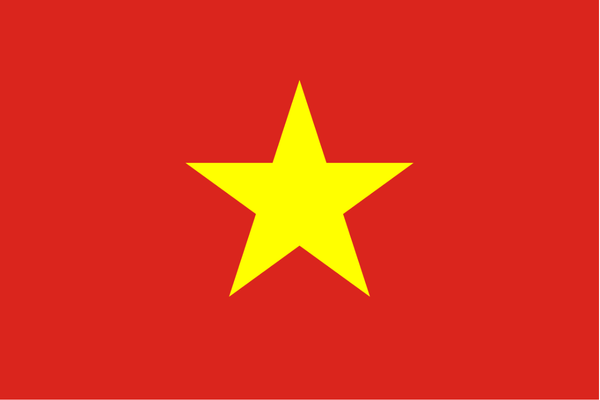
The Vietnam flag is clean and direct in its design. A bright red field forms the background. At the center sits a single five-pointed yellow star. Vietnamese people call it “Cờ đỏ sao vàng” – simply, “red flag with golden star.”
Both elements carry clear meaning:
- Red field – stands for revolution and honors the blood of those who fought for independence
- Yellow star – shows the unity of five core groups: farmers, workers, intellectuals, youth, and soldiers
As a result, this national flag does far more than mark a country. It tells the story of its people.
2. Vietnam Flag History: Origin and Official Adoption
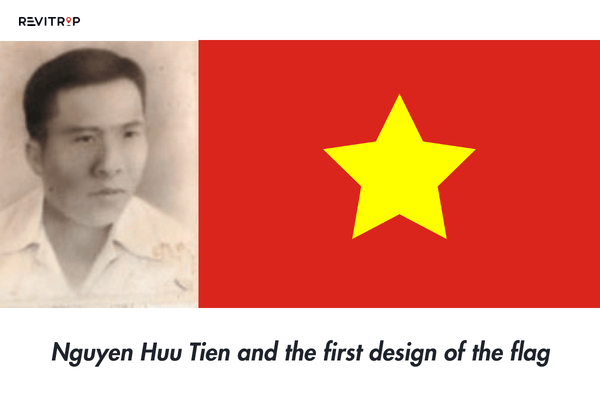
The Vietnam flag history starts with designer Nguyen Huu Tien. He created the red flag before the Nam Ky Uprising in 1940. That event was one of the first public signs of Vietnam’s push for independence.
Then, on 2 September 1945, President Ho Chi Minh raised the flag while reading the Declaration of Independence. This act founded the Democratic Republic of Vietnam. Shortly after, the National Assembly made it official in the 1946 Constitution.
During World War II and the years that followed, the flag stayed at the center of national identity. While the United States grew involved in the region and South Vietnam flew a flag of yellow stripes – where stripes represented a rival vision – North Vietnam kept the red flag with its yellow star. Even as the Viet Cong fought under their own banners, the pointed star on the red field remained a steady symbol. Finally, in 1976, the Socialist Republic of Vietnam unified the country under this flag.
3. The Meaning and Symbolism Behind the Design
The red field of the Vietnamese flag speaks to patriotism and courage. Moreover, it reflects the long fight for sovereignty that defined Vietnam’s modern history. This sets it apart from the flag of yellow stripes that once represented South Vietnam, where stripes represented a different national vision.
The five-pointed yellow star at the center breaks down into five social groups, each essential to the nation:
- Farmers — the base of Vietnamese society
- Workers — the force behind industrial growth
- Intellectuals — the guides of knowledge and progress
- Youth — the future of the country
- Soldiers — the protectors of peace and the homeland
Furthermore, the star’s central placement on the national emblem shows the people’s role in leading the country. Together, these parts form a clear symbol of unity and independence.
4. The Vietnam Flag in Daily Life and National Celebrations
The Vietnam flag shows up everywhere across the country. Government offices, schools, and private homes fly the national flag all year. In short, it is a constant part of daily life.
During key national holidays, its presence grows even stronger:
- National Day (2 September) — buildings and streets fill with the red field and yellow star
- Reunification Day (30 April) — cities across the country mark unity and shared memory
- Lunar New Year (Tết) — the Vietnamese flag adds a patriotic tone to festive settings
Beyond celebrations, the national flag also appears on stamps, banknotes, uniforms, and logos. In addition, the flag of the Socialist Republic of Vietnam flies at the SEA Games, the Olympics, and international diplomatic events.
5. Global Recognition and Respect
The Vietnam flag holds official status at the United Nations. As a result, it flies at every international event Vietnam takes part in. For global observers, the red flag with its yellow star stands for a country that rebuilt itself after years of conflict.
Among Vietnamese communities abroad, the Vietnamese flag holds strong personal meaning. People carry it at cultural festivals and community events. In this way, the red field and pointed star keep national identity alive outside Vietnam’s borders.
In sport, media, and diplomacy, the bold design works as an instant marker of Vietnam. The national emblem speaks clearly about the country’s values and direction on the world stage.
6. Interesting Facts About the Vietnam Flag
A few details make the flag stand out even further:
- The design has not changed since its adoption in 1945. This makes it one of the most stable national flags in the world.
- During wartime, citizens made the red flag by hand — painted or sewn — when factory materials were hard to find. Each one was a personal act of national pride.
- Vietnam sets strict legal rules for the national flag. These cover exact sizing, the correct shade of red for the red field, and proper ways to display it.
- In stadiums, fans wave thousands of Vietnamese flags at once to show pride and solidarity.
- Whenever Vietnam appears in global media, the red field and yellow star make the country easy to spot straight away.
Final Thoughts: More Than Just a Flag
The Vietnam flag carries the full weight of Vietnam flag history. It marks the founding of the Democratic Republic of Vietnam, the split between North Vietnam and South Vietnam, and the final rise of the Socialist Republic of Vietnam. Moreover, the pointed star on the red field appears at every key moment in the nation’s story. Above all, this national emblem reminds us that a flag is never just a piece of cloth – it is the clearest sign of who a people are and where they have been.
FAQs
Vietnam’s two flags reflect its divided history. Before 1975, North Vietnam flew the red flag with a yellow star, while South Vietnam used a yellow flag with three red stripes. After reunification in 1976, the Socialist Republic of Vietnam officially adopted the red flag with the yellow star as the sole national flag. Today, the Vietnam flag is the one and only official symbol of the unified nation.
The Vietnam flag carries two core symbols. The red field represents patriotism, revolution, and the sacrifice of those who fought for independence. The five-pointed yellow star at the center stands for the unity of five social groups: farmers, workers, intellectuals, youth, and soldiers. Together, they reflect the spirit and identity of the Vietnamese people.
Vietnam is officially a one-party socialist state governed by the Communist Party of Vietnam. The country operates under the name the Socialist Republic of Vietnam, established in 1976 after reunification. While the government follows a socialist political model, Vietnam has adopted a market-oriented economy since the Đổi Mới reforms in 1986, making it one of the fastest-growing economies in Southeast Asia.