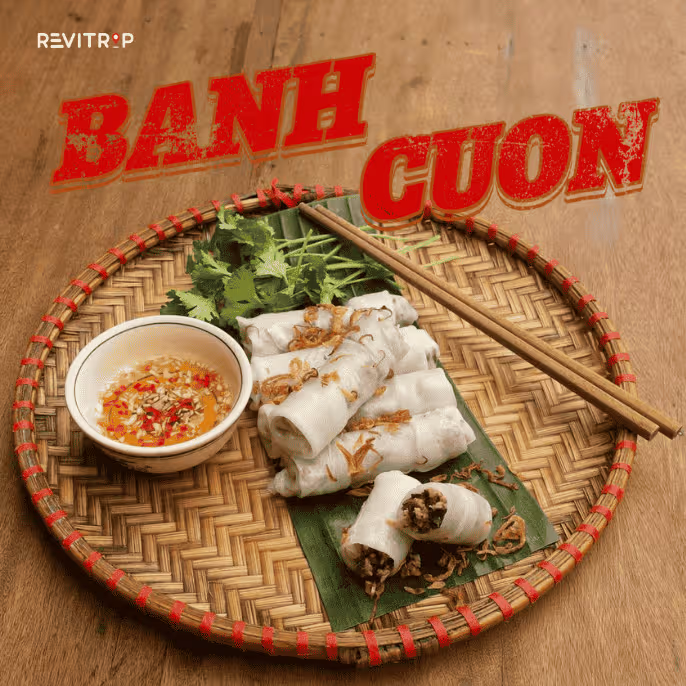
Banh Cuon may look simple at first. It seems like a few rolled noodle parcels on a plate. But making it well is truly one of the hardest tasks in Vietnamese home cooking.
I’ve eaten banh cuon at street stalls in Vietnam and in family kitchens in California.
I’ve also made it at home more times than I’d like to admit. Here’s my honest take: the dish is absolutely worth the effort, but you need to understand the batter before anything else works.
The name translates roughly to ‘rolled cakes’ — banh covering anything flour-based in Vietnamese, cuon meaning rolled. The traditional version uses a soft, steamed rice noodle sheet.
It wraps around a savory filling.
The filling contains ground pork, woodear mushroom, and jicama. It then serves the rolls with fresh herbs, bean sprouts, and a fish sauce dipping broth. It’s satisfying in a way that feels light rather than heavy, which makes it a strong breakfast or lunch option year-round.
What Is Banh Cuon?
Before diving into the recipe, it helps to understand what you’re actually making. Banh cuon is built on one core component: a thin, steamed sheet of rice batter. That sheet is peeled off a taut steaming cloth while still warm, laid flat, and then folded around a small amount of filling. The result is a cylinder about the size of a large spring roll — soft, slightly translucent, and best eaten immediately.
The filling in the traditional northern Vietnamese version uses ground pork as the protein base, combined with finely chopped woodear mushroom and jicama. The mushroom adds an earthy, subtly chewy note while the jicama contributes both texture and a gentle natural sweetness that balances the pork. Onions are sautéed first to build the base flavor. Crucially, no sugar is added — the vegetables provide enough natural sweetness on their own.
Beyond the basic version, regional variations exist across Vietnam. Hue-style banh cuon sometimes incorporates dried or fresh ground shrimp in the filling. Some vendors add sliced cha lua (Vietnamese pork sausage) on top of the finished plate. Others keep things completely plain — the unfilled version is called banh uot, meaning ‘wet cakes,’ and is equally worth trying.
Worth knowing: Banh cuon and banh uot are often sold at the same restaurant. If you’re new to the dish, order both to understand how the filling changes the experience. The plain version lets you taste the noodle sheet itself more clearly.
The Banh Cuon Batter: 3 Options and Which One to Choose
The batter is where most home cooks either succeed or give up entirely. It needs to be thin enough to spread across the steaming cloth quickly, structurally sturdy enough to lift off without tearing, and soft enough to roll without cracking. Getting this balance right is the central challenge of making banh cuon at home.
There are three practical approaches to the batter, each with a different trade-off between convenience and final quality.
Option 1: Pre-Mixed Banh Cuon Flour (Recommended for Beginners)
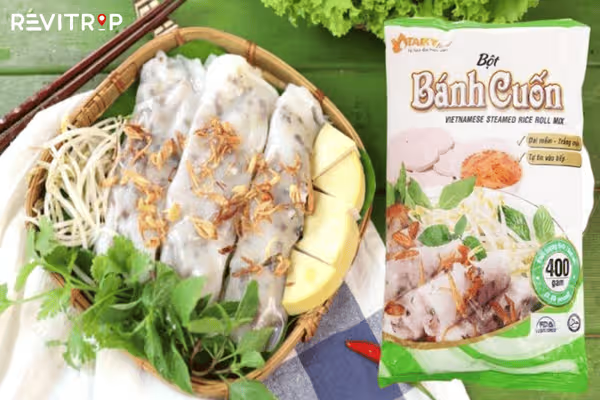
Pre-mixed flour is sold at most Vietnamese and Chinese grocery stores, and online. You add water and the flour ratio is already calibrated. For first-timers, this is the right choice — it removes one major variable from an already demanding process. The Vinh Thuan brand is the most widely tested and reliable option available in the US market. If your local Asian market doesn’t carry it, it’s available through online retailers.
The honest trade-off: experienced cooks can tell the difference, but most people at the table cannot. For home cooking, pre-mix gets you 90% of the way there with considerably less stress.
Option 2: Store-Bought Rice Flour (Middle Ground)
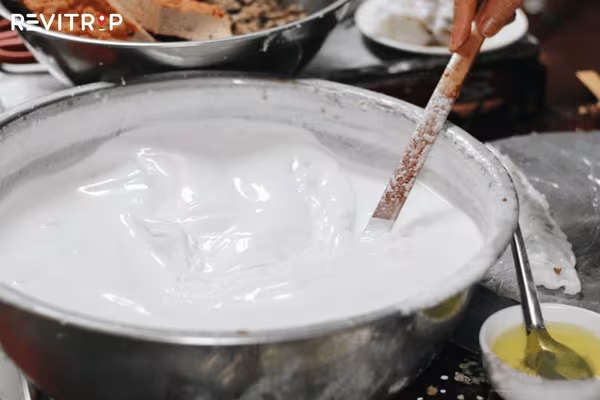
Using packaged rice flour gives you more control over the batter ratio than pre-mix, without requiring you to mill or grind your own grain. You’ll combine rice flour with tapioca starch and potato starch, then soak the mixture before cooking. The standard ratio is roughly 200g rice flour, 40g tapioca starch, and 40g potato starch per 1320g water — but soaking time significantly affects the final texture, so don’t skip that step.
The tapioca starch is responsible for the chew and elasticity in the finished noodle sheet. Too little and the sheet breaks when you try to lift it. Too much and it becomes unpleasantly sticky and mushy. Finding your preferred ratio takes a few practice batches.
Option 3: Milling Your Own Rice Flour (For Serious Cooks)
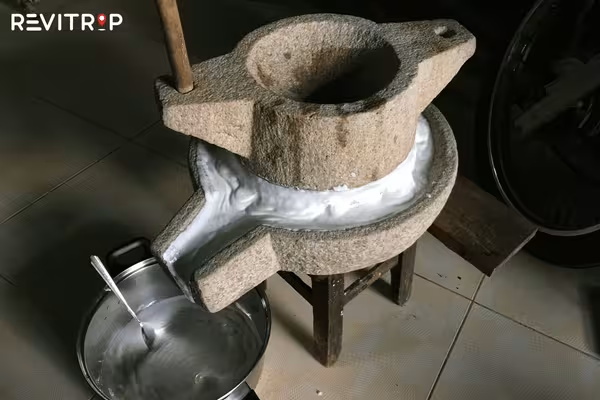
Grinding your own rice flour from long-grain rice — basmati works particularly well — produces the best final texture. The rice should ideally be on the older side, as aged grain mills into a finer flour with better steaming properties. This is the method passed down through generations of Vietnamese households, and the one that produces the noodle sheets with the most desirable combination of softness and subtle chew.
However, this approach requires soaking the rice grains first, then milling them into a fine slurry, then soaking again. The full process adds significant time and equipment requirements. Unless you’re deeply committed to the dish, start with one of the first two options and work up to this level gradually.
My take: I spent several batches trying to skip the soaking step. Don’t. The soak removes a faint raw rice smell that only becomes obvious after steaming — it’s not strong, but it’s definitely there, and it affects the eating experience. Eight hours minimum, overnight is better.
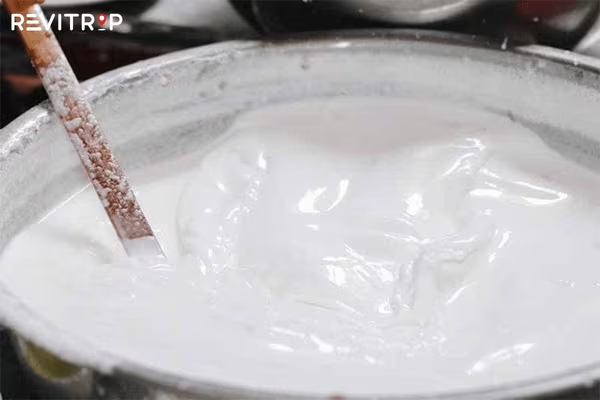
Why Soaking the Batter Matters (And How to Do It Correctly)
No matter what flour you use (pre-mix, store-bought, or freshly milled), you still need to soak. Don’t skip this step.
Soaking does three things:
- It makes the steamed sheet softer.
- It makes the sheet look clearer and slightly translucent (not chalky white).
- It removes the raw flour smell.
How to soak it right:
- Mix all flours in a large bowl. Add enough water to cover the flour by a few inches.
- Let it sit until the flour sinks. Wait at least a few hours.
- Pour off most of the water slowly. Don’t disturb the flour at the bottom.
- Add the same amount of fresh water back in.
- Repeat this rinse 1-2 times during the soak.
- Before cooking, stir the settled flour back in. It should feel very soft.
Shortcut:
- If you soak rice flour for 2 full days and change the water 2-3 times, the starch gets very soft. You may not need tapioca or potato starch. The sheet tastes more like pure rice.
- If you’re short on time, use rice starch (not rice flour). Soak it for 8 hours and change the water once. You can get a similar texture.
Banh Cuon Steamer vs. Frying Pan: Which Method Actually Works?
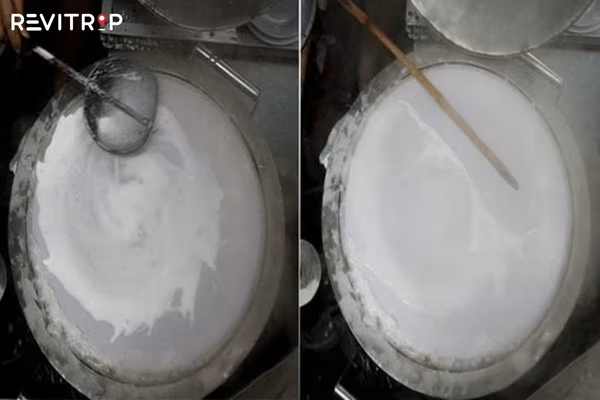
A proper banh cuon steamer is the method that consistently works. It is a wide pot with a tight fabric surface stretched over boiling water. You pour a thin layer of batter onto the hot cloth, cover it, and steam it for around 40 seconds. Then you peel the sheet off. Steam cooks the sheet evenly and quickly. It also prevents that raw flour taste and gives the delicate texture people expect.
The frying pan method can work, but it is a compromise. The ratios in most steaming recipes do not translate well to a pan. You often need less water and you may need to change the flour balance. Even then, the sheet tends to cook unevenly. The texture turns denser and the flavor feels less clean. If you want a result that tastes like restaurant-style banh cuon, it is worth getting a steamer first.
The Traditional Banh Cuon Filling: Ingredients and Cooking Order
The filling is easier than the batter. If your prep is clean, it is hard to mess up. The classic mix is ground pork, dried woodear mushrooms, diced onion, and jicama. Green onion is optional, but it adds a fresh finish.
Jicama is worth using instead of swapping in another vegetable. It stays lightly crisp, it is mildly sweet, and it does not turn watery if you treat it right. The key is to squeeze it dry before it hits the pan. If you skip that, the filling releases water, the flavor gets diluted, and the rolls can turn soggy.
Cook in a simple order. Start with onion and cook until lightly golden. Add the pork and season it, then break it into small pieces as it cooks. When the pork is mostly cooked, add the jicama and keep cooking until the pan looks dry again. Add the mushrooms last and cook just long enough to heat through. If you cook woodear too long, it loses its bite. Turn off the heat before you add green onion so it stays bright.
A quick note on seasoning. Salt, MSG, and black pepper are the traditional base. MSG is common in Vietnamese home cooking for this kind of filling because it boosts savory depth without making it taste “fishy.” If you do not want to use MSG, increase salt slightly and add a small splash of fish sauce. Keep it light. You want the filling to taste clean, not loud.
Sides and Garnishes: What to Serve With Banh Cuon
Banh cuon is not meant to sit alone on a plate. The sides are part of the meal. They add crunch, fragrance, and contrast, so each bite feels new instead of repetitive.
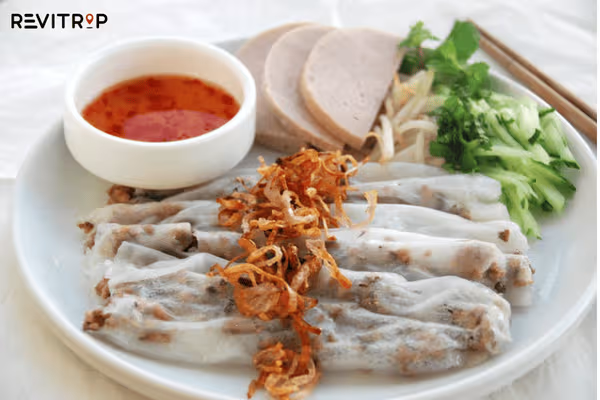
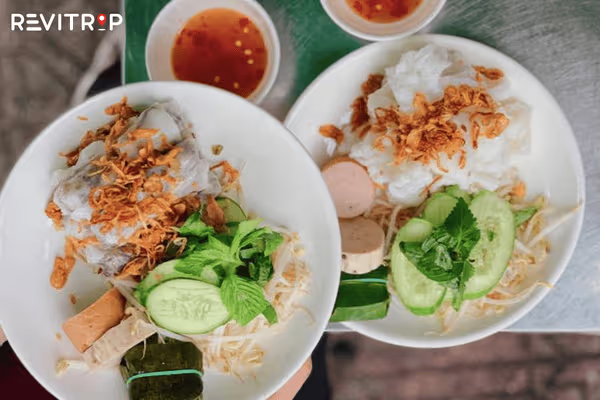
Bean sprouts are the one side that almost always belongs. Blanch them briefly so they soften, but keep a little snap. Fresh herbs matter, too. Thai basil and mint are the easiest baseline. If you can find rau ram, it adds a sharper, more peppery edge that works well with pork. Fried shallots go over the top for aroma and texture. Then you need the fish sauce dipping broth. Without it, the dish feels flat.
Cucumber is a smart extra if you want a cleaner finish. Use Persian or Japanese cucumber and slice it thin. It cuts through the richness and makes the plate feel lighter. Cha lua, the Vietnamese steamed pork sausage, is also a classic add-on. It is optional at home, but it makes the plate feel more complete.
Serve everything at the same time and eat right away. Fresh banh cuon is delicate. After about 10 minutes, the sheets start to tighten and lose that soft, silky texture. Do not plate early. Plate when you are ready to sit down.
How to Store Banh Cuon Batter (And Why You Probably Shouldn’t)
If you store batter in a clean, covered container in the fridge, it can stay usable for about 7 to 10 days. After the initial soak and water changes, you do not need more water changes for texture. You can just stir and cook.
But older batter does change. The starch keeps softening in the fridge. After several days, the batter usually pours thinner and feels looser than fresh. The fix is simple. Stir in a few tablespoons of rice flour before cooking to tighten it back up. Your goal is a batter that pours in a smooth, thin stream from a ladle. It should not fall in thick clumps.
Still, the honest advice is to cook the full batch in one session. The steamer setup and cleanup take real time. You have the cloth to wash, the pot to scrub, and bowls to rinse. Splitting it across multiple days rarely saves effort. It just repeats the mess.
Step-by-Step: How to Steam and Roll Banh Cuon
Add salt to the batter right before you cook, then stir well. Fill your pot about two-thirds with water and bring it to a full rolling boil. Do not pour batter until the boil is strong. Weak heat is the fastest way to get sticking and tearing.
Oil the plate or tray where you will lay the sheets. Re-oil between rolls or the sheets will glue themselves together. Keep your filling close. Keep your stick or spatula ready. Set a timer for around 40 seconds.
Stir the batter every time before you scoop. The heavier starch settles fast. Pour a thin layer onto the hot cloth and spread it immediately with the back of the ladle. Move quickly. If you hesitate, the batter sets before it is fully spread, and the ladle can stick and tear the sheet.
Cover and steam for about 40 seconds. A cooked sheet looks clearer and less white. You may see small bubbles on the surface. If it still looks opaque, cover for another 10 seconds.
To lift it, slide your stick or spatula a couple inches under one edge, then lift steadily across the circle. Lay the sheet flat on the oiled plate. Add a small spoon of filling near one edge and fold the sheet over a few times to form a loose cylinder. It does not need to be perfect. Slightly messy is normal.
One warning for first-timers. The first two or three sheets often fail. They stick, they tear, or they come out uneven. That is the cloth warming up and “priming,” not proof the recipe is wrong. Keep going and judge your results after the fourth sheet.
( Read more: Banhcuon)
Where to Buy Banh Cuon If You’re Not Cooking at Home
If you live near a Vietnamese community, banh cuon is usually easier to find than people expect. Many banh mi counters and Vietnamese grab-and-go shops sell ready plates. The quality varies, but it is often better than supermarket versions.
In bigger Vietnamese hubs, you will also find restaurants that specialize in banh cuon. These are usually the best choice because the sheets are made fresh and the sides are done properly.
Vietnamese supermarkets sometimes sell pre-made plates in plastic wrap near the checkout or in the fridge section. They are convenient, but the texture is the trade-off. The sheets sit too long, so they lose the soft, elastic feel that makes fresh banh cuon special. They are fine in a pinch, but they should not be your first experience.
FAQ
It’s not hard, but it is technical. The batter and heat control take practice. Most people need 2-3 sessions to get consistent sheets.
No. Premix still benefits from soaking. It improves softness, clarity, and removes raw flour smell.
Slightly translucent and smooth. It should be thin, but strong enough to lift without tearing.