Vietnam has no shortage of headline destinations. When people search “best places to visit in Vietnam,” they’re usually picturing Ha Long Bay’s limestone towers, lantern-lit Hoi An, Da Nang’s beaches, the momentum of Ho Chi Minh City, or the tropical pull of Phu Quoc.
But on a first trip, the smarter decision isn’t chasing the most photographed location. It’s selecting the right base – somewhere that absorbs your jet lag, forgives small planning mistakes, and lets the country reveal itself gradually instead of all at once. For many first-time visitors, that base is Hanoi.
Quick answer
The best places to visit in Vietnam for first-timers typically include Hanoi, Ha Long Bay, Hoi An, Da Nang, and Ho Chi Minh City.
For many travelers, beginning in Hanoi provides the strongest foundation. It delivers high cultural concentration, adaptable daily pacing, and straightforward access to northern highlights, all without the friction of constant relocation.
3 safe defaults:
- Choose one primary base.
- Structure your days in flexible blocks (morning – afternoon – evening).
- Keep logistics predictable and deliberately unexciting (reputable rides, screenshots, simple payment habits).
Where to Start in Vietnam: A Practical Comparison
| Travel Priority | Starting Base | Why It Works |
| Cultural immersion & street-level texture | Hanoi | High-density heritage, visible daily rituals, walkable neighborhoods, and layered coffee culture |
| Iconic natural scenery | Ha Long Bay | Limestone karsts, overnight cruises, and concentrated visual impact in a short timeframe |
| Preserved old-town atmosphere | Hoi An | Compact architecture, lantern-lit evenings, slower rhythm, and aesthetic continuity |
| Beach access with urban comfort | Da Nang | Manageable infrastructure, coastline proximity, and easy regional connections |
| Fast-paced modern energy | Ho Chi Minh City | Contemporary skyline, commercial momentum, and high-intensity urban flow |
All of them are legitimate choices. The real distinction isn’t which is “best”; it’s which one aligns with your energy level and how much complexity you want on day one. For many first-time visitors, Hanoi offers the smoothest entry point.
What people actually mean by “best places to visit in Vietnam”
“Best” sounds like a ranking. In real life, it’s usually a feeling you’re chasing:
You want a place where you can land slightly disoriented, still eat well, still explore, still sleep, and still feel like you’re doing Vietnam right, without needing a spreadsheet or a sixth sense.
Hanoi works because it’s built for plan-light travel. You can keep it simple and still have a rich day. That’s the secret sauce for first-timers: the city lets you be a little imperfect and you won’t pay for it too hard.
A useful filter is this: if you want culture, street life, coffee breaks, and small scenes that don’t require reservations, Hanoi will feel like an immediate win. If you want to wake up to silent water and spend the day horizontal, Hanoi can still be part of your trip, but as a different chapter. For now, we’re talking about the safest opening move.
Why Hanoi makes the best first base
High reward per hour
The street energy is immediate but not impenetrable. Around Hoan Kiem Lake, within the Old Quarter’s tight grid, or near the Temple of Literature, daily rituals unfold without you having to curate them. A morning coffee balanced on a low plastic stool. A courtyard that compresses the city’s noise into silence. The choreography of scooters that initially feels chaotic but gradually reveals its internal logic.
That density matters when you’re tired. It allows you to scale your effort without shrinking your experience.
Flexible days, not fragile itineraries
Some destinations punish you for improvising. Hanoi doesn’t. A great Hanoi day can be built with three choices:
A gentle morning loop, one deeper focus in the afternoon, and an evening vibe that matches your energy level. That’s it. You’re not collecting attractions. You’re building a rhythm.
The city also has a talent for being interesting at multiple speeds. If you’re the kind of traveler who needs naps, long lunches, and slow wandering, Hanoi will still feed you. If you’re high-energy and curious, it will feed you faster. Either way, you don’t have to constantly relocate to keep things exciting.
It teaches you Vietnam, quickly and safely
Vietnam has a learning curve: street crossings, scooter logic, negotiating without turning it into combat, and the subtle difference between “yes” as confirmation and “yes” as polite noise.
Hanoi is a good classroom because it’s busy but legible. By day three, most people stop feeling intimidated and start feeling fluent – not in language, but in movement. That confidence becomes a travel upgrade everywhere else you go.
The Hanoi playbook: how to experience it without trying too hard
Here’s the version of Hanoi that feels local without you performing “local.”
Start with timing, not intensity
If Hanoi ever feels overwhelming, it’s often a timing problem. Early mornings are calmer, softer, and surprisingly poetic. Go out before the day heats up. Walk a simple loop. Drink coffee. Let the city come online around you instead of colliding with it at full volume.
Choose your pace neighborhood-first
Hanoi isn’t one mood. It’s a collection of moods. You don’t need a perfect map. You need one simple question: do you want to step into motion immediately, or do you want a quieter landing zone?
If you like energy and convenience, stay close to where you can walk out and be “in it.”
If you need sleep and calmer mornings, bias toward quieter streets and more open air. This isn’t about being tough. It’s about being functional. A good trip is built on decent sleep.
Coffee culture: keep it simple, keep it real
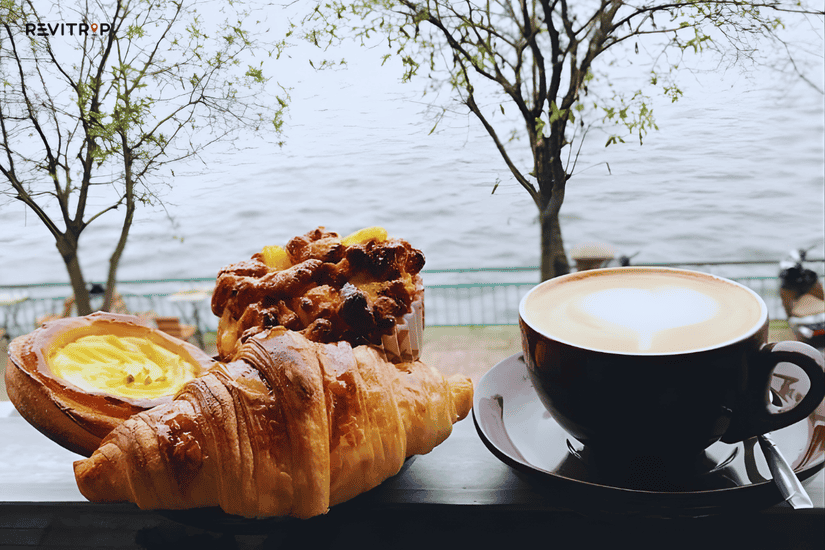
Hanoi’s coffee culture is best when you don’t turn it into a scavenger hunt. Skip the urge to chase “the most famous” anything. Pick places that feel lived-in. If the vibe is more ring light than real life, keep walking.
A great Hanoi coffee break is short, ordinary, and oddly perfect. It’s a pause that makes the rest of the day better.
Temples and pagodas: the calm anchor
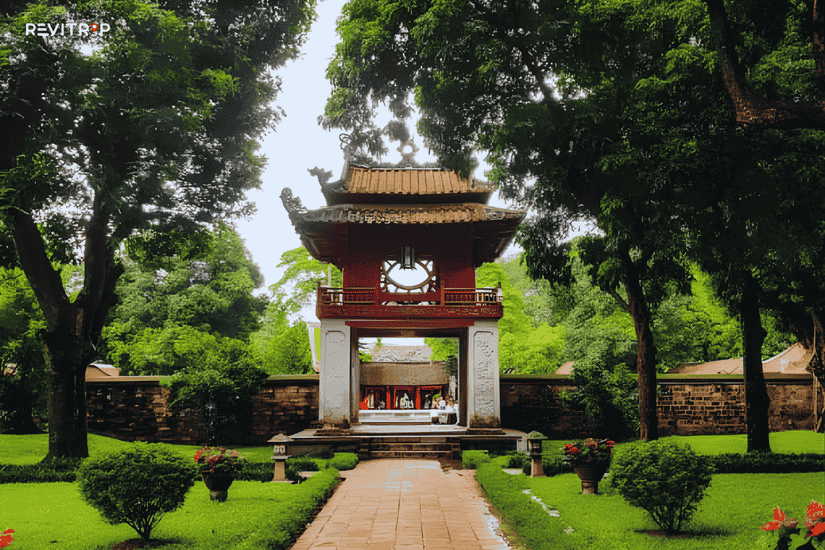
If you want one practice that instantly improves your Hanoi experience, it’s learning temple etiquette. Not because you’re trying to be impressive, but because these spaces will give you the calmest hour you’ll have all day.
Move gently. Dress modestly. Speak softly. Observe first. Don’t block someone’s prayer line. That’s enough. You’ll feel the city exhale.
Rainy-day Hanoi: make it deeper, not smaller
Rain happens. The mistake is treating it like a failure. Build a “rain mode” day that still feels intentional: one indoor stop, one long meal, one slow coffee, and a covered wander. Rain days are for depth, not distance. If you stop fighting the weather, Hanoi stays fun.
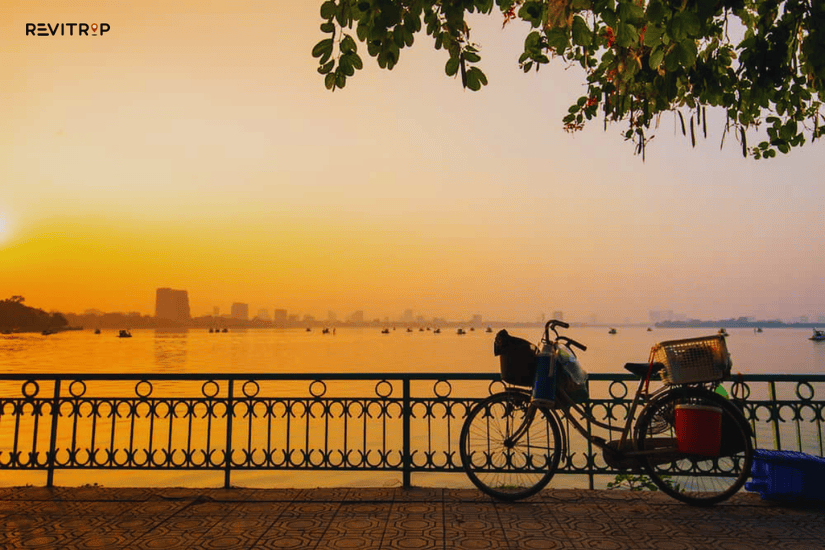
A grounded first full day in Hanoi might unfold like this: an early loop around Hoan Kiem Lake before traffic thickens, a late breakfast tucked inside the Old Quarter, one deliberate cultural anchor such as the Temple of Literature or a museum visit, then sunset light along West Lake before an unhurried street-food dinner. No over-optimization. One meaningful anchor. The rest adaptable. (Read more: Unique Things to Do in Hanoi: West Lake Edition)
Hanoi base plans that actually hold up
These are day structures, not strict schedules. Think of them as a frame you can fill with your own preferences.
- 24 hours (landing plan): a gentle walk and coffee in the morning, one focused afternoon activity, and an easy evening of street food sampling and early rest if you’re jet-lagged. The goal is orientation, not achievement. (Read more: Hanoi Food Tour: One Day Eating Around the Old Quarter)
- 3 days (feel the city): day one for settling and walking loops, day two for culture and slower stops, day three for either a half-day escape or a deeper neighborhood drift. Keep one “anchor” per day, everything else optional.
- 5 days (sweet spot): build the first three days like above, pick one “big day” if you want it, then give yourself a recovery day back in the city. Hanoi is at its best when you’re not sprinting through it.
Five Hanoi rules that keep your trip smooth
- Leave buffer time. Tight connections and Hanoi don’t get along.
- Use reputable ride-hailing or clearly agreed prices. Don’t freestyle transport when you’re tired.
- Cross streets predictably: steady, calm, no sudden sprints.
- Carry small bills. It saves you from awkward change drama and rushed transactions.
- When in doubt, simplify. One excellent plan beats five mediocre ones.
FAQ
January is one of the easier months to travel because the pace feels calmer and the heat isn’t trying to win a fight with your energy. If you want a culture-forward start with comfortable walking weather, Hanoi is a strong base, especially for first-timers who like structure without rigidity. If “best” means beach time and warm water, aim for warmer southern or coastal areas and keep your days simple rather than over-scheduling.
For solo travel, “best” usually means easy navigation, low-stress logistics, and a city where being alone still feels full. Hanoi fits that well because you can build satisfying days out of small pieces – coffee breaks, short walks, one cultural stop, an unhurried evening – without needing complicated bookings. Keep it boring-but-smart: reputable rides, screenshots, small bills.
With family, the best place is often the one that keeps everyone regulated: decent sleep, predictable transport, and flexible days that don’t collapse when someone gets tired. Hanoi works as a family base if you plan in loose blocks and bias toward calmer mornings and quieter nights. Stick to one anchor activity per day, add plenty of breaks, and the city feels lively instead of exhausting.