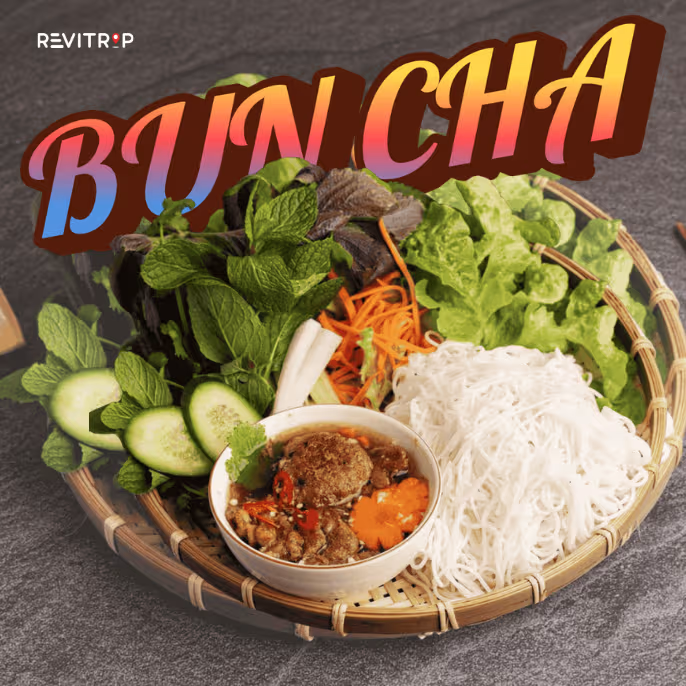
If this is your second or third visit to Hanoi, you know the pitch.
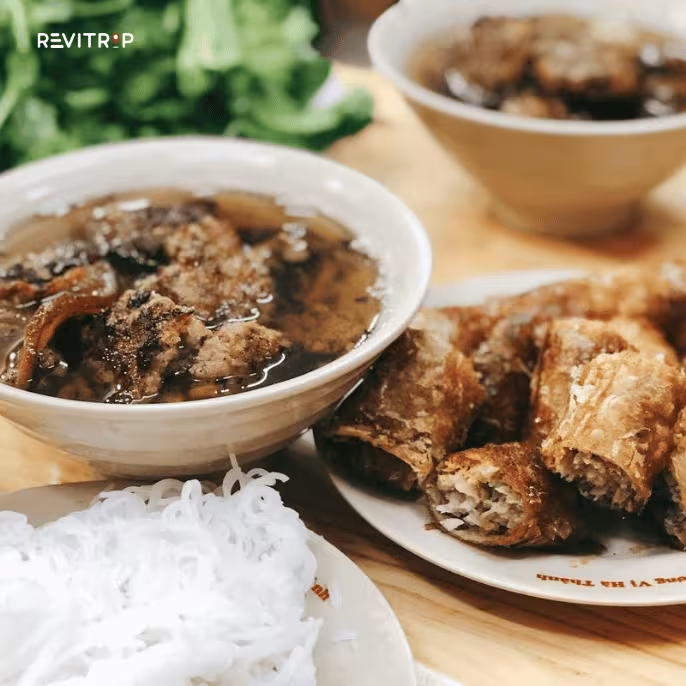
Smoky grilled pork, sweet and savory broth, fresh herbs, and rice noodles. You’ve probably eaten bun cha once. Maybe twice.
And now you may wonder: Is bun cha still worth your stomach space in 2026? Or is it now a dish Hanoi rides on, since Obama ate it on TV?
Here’s my honest answer: bun cha is still one of Hanoi’s best dishes. But the version worth eating is harder to find.
If you go to the first place Google suggests, you may be disappointed. You might leave wondering what the fuss was about.
This guide is for travelers who have been to Hanoi before. They have eaten the basics.
They now want to know if bun cha deserves a spot again. It is a limited itinerary. Spoiler: it does — but only if you approach it right.
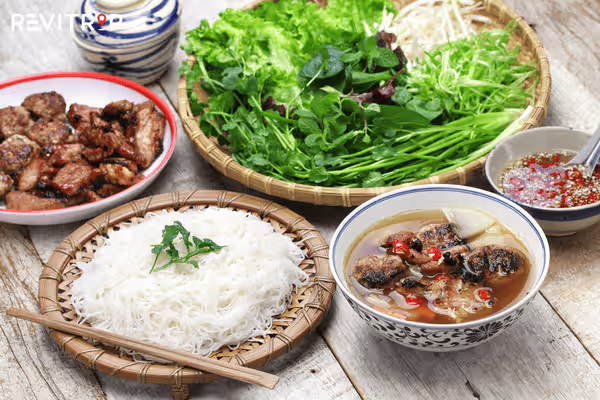
The Honest Case AGAINST Bun Cha (What Return Travelers Notice)
Here’s what nobody in the food media says clearly enough: bun cha has a tourism problem.
The Obama visit in 2016 created a new type of bun cha restaurant.
These places mainly serve people who want to say they ate bun cha in Hanoi. These places aren’t bad—they’re clean, they offer English menus, and they grill the pork adequately. But they’ve optimized for volume and recognition, not flavor.
The broth is milder. The grill is sometimes gas. The charcoal smell—an essential part of eating real bún chả on a Hanoi sidewalk—has disappeared.
If you ate bun cha at a well-known tourist spot on your first visit and thought, “It was fine. I don’t get the obsession.” That reaction makes complete sense. You may have eaten a competent but diluted version of the dish.
The other honest issue: Bun cha is a lunch dish, and a heavy one. If you want to eat your way through Hanoi fast, a full lunch on bun cha means skipping pho. You may also skip bun dau mam tom, banh cuon, or something else.
On a second visit with more time, that trade is easy. On a tight itinerary, it requires a real decision.
Skip or Visit? The Framework for Return Travelers
Visit If:
- Your first bun cha was at a tourist restaurant. You left feeling like you missed something. You probably did.
- You’re in Hanoi for 3+ days and lunch slots aren’t precious
- You’re willing to walk past the “famous” spots and find somewhere with an actual charcoal grill and no English signage outside
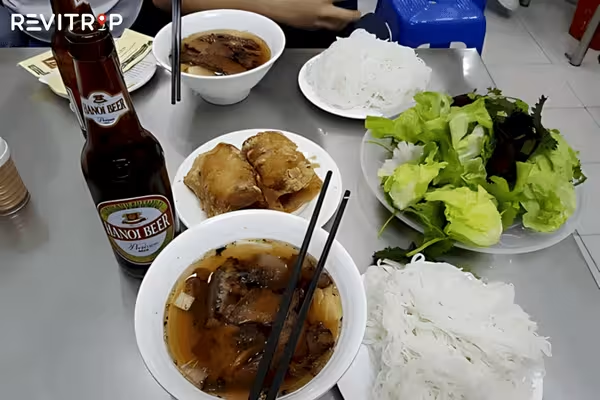
- You want to eat it with nem cua be (crab spring rolls) properly — this combination is worth the trip alone when both are done right
Skip If:
- You’ve already had excellent bun cha on a previous trip and you’re working through a tight food list — there’s no shame in moving on
- You only have one or two days and you haven’t yet tried bun dau mam tom pho or banh cuon — those should come first for novelty value
- It’s after 2pm — most good bun cha stalls have either sold out of their best cuts or shut down entirely
The Obama Restaurant Question
Worth it if: You care about the cultural moment. Bring someone who cares about the story. Or you want a comfortable, English-friendly setting with no surprises.
Not worth it if: You’re prioritizing flavor over narrative. The food at Bun Cha Huong Lien (the Obama spot) is reliably good.
But it is not the best bun cha you can eat in Hanoi.
The wait time and the tourist premium are real. Go in with calibrated expectations and you won’t be disappointed. Go expecting a revelation and you might be.
My honest take: I’ve been once. Glad I went. Wouldn’t make it a priority on a return visit.
What Separates Good Bun Cha From Mediocre Bun Cha
Since you’ve been to Hanoi before, here’s the quality checklist that actually matters:
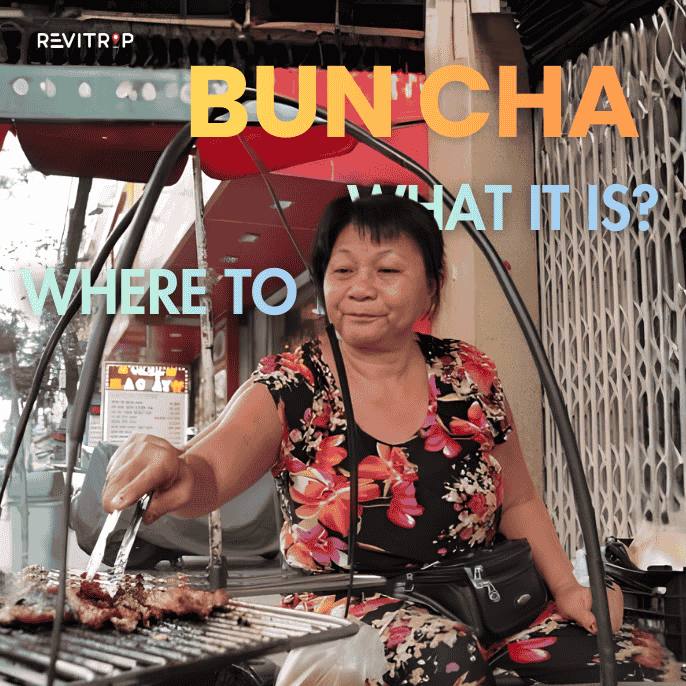
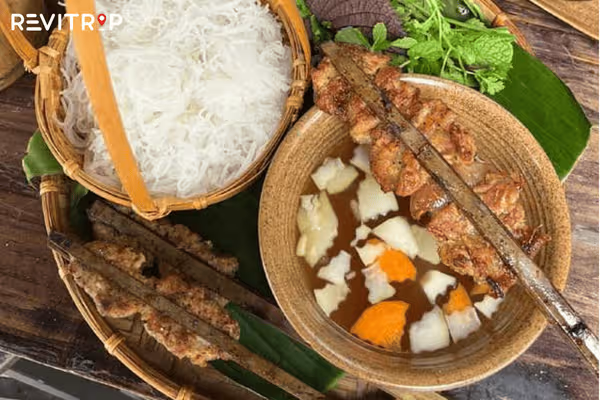
The grill: Real charcoal, visible smoke, slight char on the meat. If the kitchen fully encloses you and you smell nothing from the street, something is off.
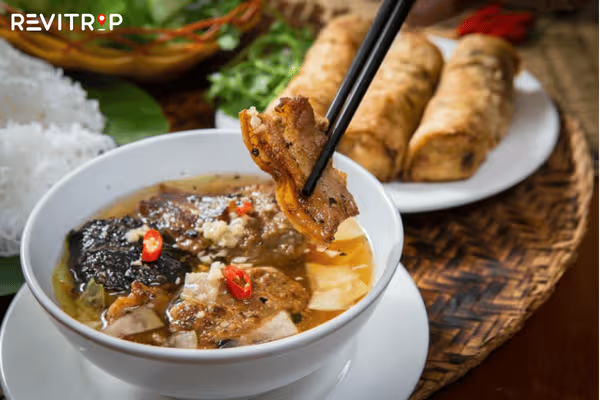
The broth: Should be warm, not hot. Clear or very lightly cloudy. Sweet-savory with a mild vinegar tang.
Stalls that serve it cold or room temperature are skipping a step. Large batches of pre-made broth often taste flat or overly sweet.
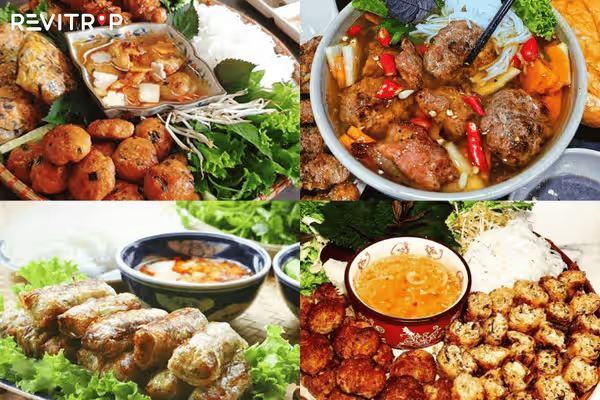
The pork patties (cha vien): Slightly springy, with visible char marks, not overly dense or homogeneous. Good ones have a bit of pork fat mixed in. Mediocre ones taste like compressed lean pork.
The nem cua be (if ordering): Crab spring rolls should be light, not doughy, with real crab flavor. These vary wildly by stall — worth asking before ordering.
Portion honesty: A full bun cha portion is not a small meal. Most people don’t need to add extras. Order the standard, eat it properly, and reassess.
Practical Details: Eating Bun Cha Hanoi in 2026
Timing
Go between 11:30am and 1pm. This is non-negotiable for quality. The grill is hot, I prepped the pork that morning, and the broth hasn’t sat for three hours.
Arriving at 2pm is a gamble. Arriving at 7pm means most of your real options are closed.
Cost Reality
- Standard bun cha portion: 40,000 – 60,000 VND (~$1.60 – $2.40)
- With nem cua be: Add 20,000 – 35,000 VND per roll
- Drinks (bia hoi or soft drink): 10,000 – 20,000 VND
- Realistic total: 60,000 – 100,000 VND (~$2.40 – $4.00)
If a bun cha spot charges 120,000+ VND for a standard portion with no notable additions, you’re paying for the address. Not the food.
Where to Look
Skip the famous-name restaurants for your first stop. Instead, walk through the streets around Hang Dieu, Le Van Huu, or the backstreets off Ly Quoc Su between 11am and noon. When you smell charcoal smoke and see Vietnamese office workers on lunch break — sit down. That’s the heuristic that works better than any list.
( Read more: Buncha)
The Verdict: Is Bun Cha Hanoi Worth It for Return Travelers?
Yes — with a condition.
Bun cha remains one of Hanoi’s genuinely great dishes. The smoke, the broth, the herb assembly — when it comes together correctly, it’s one of those meals you think about on the plane home. However, for a return traveler who already knows Hanoi, the work is finding a stall.
It should still do it the old way, not default to comfort and familiarity.
The dish hasn’t declined. The ecosystem around the dish has gotten noisier. Navigate past the noise and bun cha is still absolutely worth a lunch slot in Hanoi — even on your third visit
FAQ
Add herbs into the dipping bowl first. Then pick up a small bundle of noodles and dip it into the sauce with pork.
Don’t mix everything at once. Dip bite by bite to keep the noodles from getting soggy.
Locals eat it casually. You don’t need a special technique.
Most local spots charge 40,000–70,000 VND ($1.50–$3).
Tourist-heavy restaurants may charge more, but bun cha is still one of the most affordable meals in Hanoi.
Yes. It’s one of the safest and most approachable Hanoi dishes.
It’s less intense than fermented dishes like bun dau mam tom and easier for most visitors than offal-heavy meals.