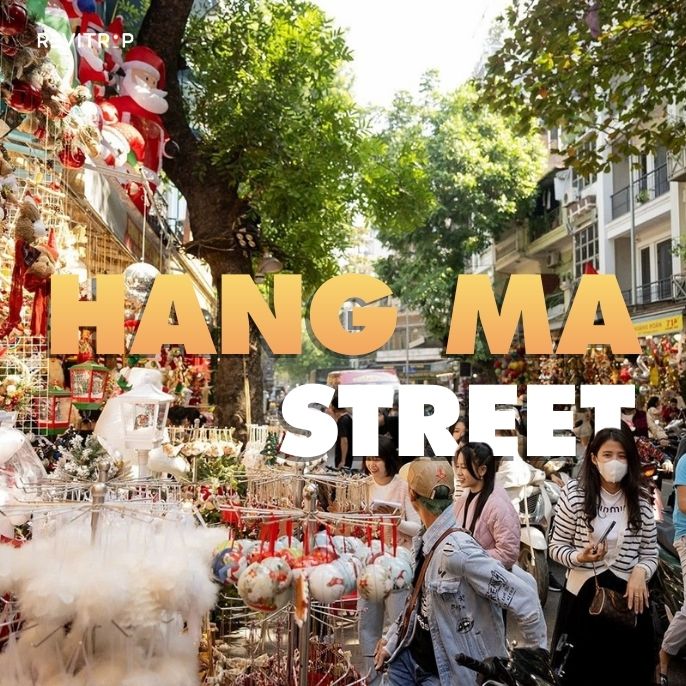
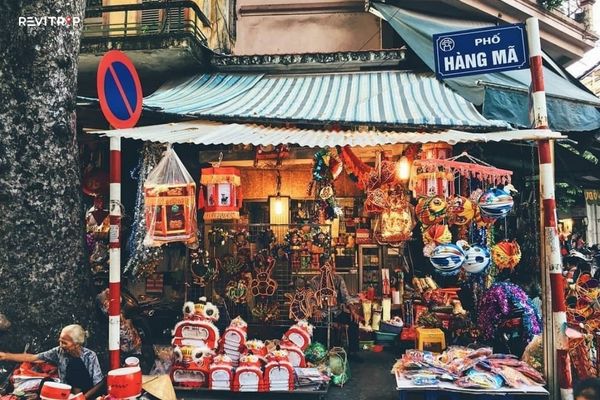
Traveled to Train Street only to find it closed again? Don’t waste your trip. Walk 5 minutes north to Hang Ma Streetinstead. Honestly, you’ll discover one of Hanoi’s most photogenic streets exploding with red lanterns, gold paper offerings, and colorful festival decorations.
Hang Ma Street delivers the colorful, Instagram-worthy photos tourists want from Hanoi, plus genuine cultural insight into Vietnamese festivals and traditions. Moreover, it’s always accessible, completely free, and five minutes from Train Street.
Hang Ma Street at a Glance
Vietnamese name: Phố Hàng Mã
Location: Old Quarter, Hoàn Kiếm District, between Hàng Buồm and Hàng Đường
Distance from Train Street: 400 meters (5-7 minute walk)
Specialty: Religious offerings, festival decorations, paper goods
Length: ~300 meters
Access: Free, always open (it’s a public shopping street)
Best time: Before festivals (most colorful), or anytime for year-round color
Time needed: 30-60 minutes
Perfect for: Photography, cultural understanding, festival shopping, Instagram
Why visit when Train Street is closed:
- 5-minute walk from Train Street entrance
- More colorful than Train Street (by far)
- Always accessible (no security, no closures)
- Genuine cultural significance (not just a novelty)
- Better Instagram photos (vivid colors vs. drab alley)
- Free (no forced cafe purchases)
What Is Hang Ma Street? Understanding the History
The Guild Street Heritage
Hang Ma Street is one of Hanoi’s original 36 guild streets, dating back centuries. Specifically, “Hàng Mã” translates to “Paper Votive Street” or “Paper Goods Street.”
Artisans specialized in creating paper and bamboo items for religious ceremonies primarily votive offerings burned during worship to honor ancestors and deities.
What they made (and still make):
- Votive paper money (fake currency for the afterlife)
- Paper replicas of houses, cars, clothes, phones
- Religious offerings and ceremonial items
- Festival decorations and lanterns
- Ritual objects for temples
Unlike Train Street (just residential tracks), Hang Ma Street represents genuine Vietnamese spiritual culture dating back hundreds of years.
Modern Evolution
While traditional votive papers remain central, Hang Ma Street Hanoi has expanded to include:
Year-round products:
- Colorful lanterns (all sizes, all colors)
- Decorative items for homes and businesses
- Party supplies and balloons
- Seasonal decorations
Festival specialties:
- Mid-Autumn Festival: Star-shaped lanterns, mooncake boxes
- Tết (Lunar New Year): Red decorations, peach blossoms, kumquat trees
- Wedding ceremonies: Red and gold decorative items
Why Hang Ma Street Beats Train Street (Especially When It’s Closed)
1. Accessibility (Critical Advantage)
Train Street reality:
- Closed by security since 2019 (intermittent reopening)
- Security checkpoints block access
- Even when “open,” access is restricted
- Unpredictable might travel there and find it completely blocked
Hang Ma Street reality:
- Public shopping street, never closed
- Open 24/7 (shops operate ~8am-8pm)
- Zero access restrictions
- 100% guaranteed you can visit
2. Visual Impact and Photography
Train Street photos:
- Narrow alley (limited angles)
- Mostly gray/brown tones
- Requires train to be interesting
- Everyone gets identical shot
Hang Ma Street photos:
- Explosion of red, gold, pink, yellow, green
- 300 meters of varied compositions
- Every shop front is unique
- Textures, patterns, colors galore
- Works in any lighting condition
Instagram reality: Hang Ma Street photos consistently get more engagement than my Train Street photos. Why? Color. Variety. Visual interest.
3. Cultural Significance
Train Street: Urban curiosity. Interesting to see trains pass close to houses, but it’s essentially a novelty. No deeper cultural meaning.
Hang Ma Street: Window into Vietnamese spiritual life and festival traditions. Each item tells a story about ancestor worship, religious beliefs, seasonal celebrations.
What you’ll learn:
- How Vietnamese honor deceased relatives
- Why certain colors and symbols matter
- How festivals shape Vietnamese culture
- Traditional craftsmanship techniques
When Hang Ma Street Is MOST Spectacular
1. Before Tết (Lunar New Year) – PEAK SEASON
Timing: 2-3 weeks before Tết (usually late January to mid-February)
What you’ll see:
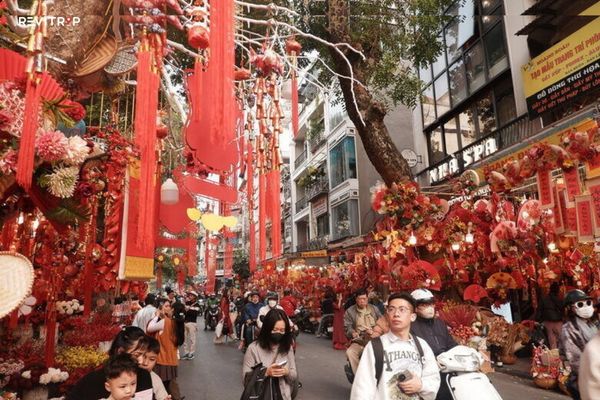
- RED EVERYWHERE: The entire street transforms into a sea of red
- Decorative banners with gold Vietnamese calligraphy
- Fake peach blossom branches and kumquat trees
- Red envelopes (lì xì) by the thousands
- Traditional Tết decorations stacked ceiling-high
Why it’s special: Tết is Vietnam’s biggest holiday. Consequently, Hang Ma Street becomes the primary destination for Hanoians buying decorations. Therefore, the energy is electric, the colors are overwhelming, and the photo opportunities are endless.
2. Before Mid-Autumn Festival (Tết Trung Thu) – SECOND PEAK
Timing: 2-3 weeks before Mid-Autumn Festival (usually September)
What you’ll see:
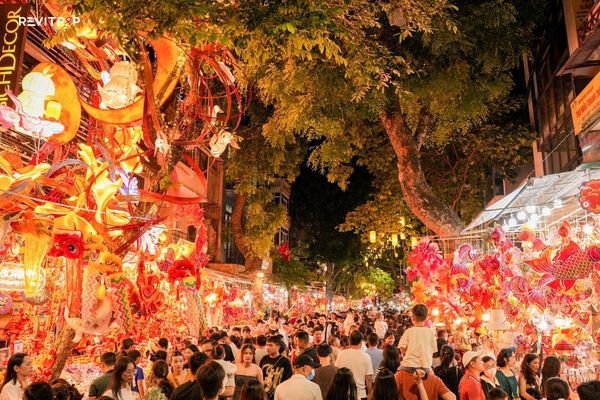
- Star-shaped lanterns in every color imaginable
- Rabbit-shaped lanterns (Mid-Autumn Festival symbol)
- Mooncake packaging and decorative boxes
- Traditional drums and toys
- Children’s festival items
Why it’s special: This is Vietnam’s festival for children. Therefore, Hang Ma Street fills with playful, whimsical items creating a different but equally photogenic atmosphere than Tết.
3. Year-Round (Always Colorful)
What’s always available:
- Red and gold lanterns (smaller selection but still vibrant)
- Traditional votive papers and offerings
- Wedding decoration items (red and gold)
- General party supplies
Honest assessment: Even outside festival seasons, Hang Ma Street is more colorful than 90% of Hanoi. However, if your visit coincides with pre-Tết or pre-Mid-Autumn, absolutely prioritize it you’ll see the street at its absolute best.
What to Do and See on Hang Ma Street
1. Window Shopping and Photography (Main Activity)
Simply walking Hang Ma Street with your camera is the primary activity.
Best approach:
- Start at southern end (near Hàng Buồm intersection)
- Walk slowly north, observing each shop
- Don’t rush, stop at interesting displays
- Ask shop owners before taking close-up photos
- Interact politely with vendors
Time needed: 30-45 minutes to walk and photograph the full street
Photography strategy:
- Wide shots: Capture the overall street atmosphere
- Shop fronts: Individual stores bursting with color
- Detail shots: Close-ups of lanterns, patterns, textures
- People: Vendors arranging displays, customers shopping (ask permission)
- Looking up: Items hanging from ceilings create canopies of color
My favorite composition: Stand mid-block and shoot down the street. The compressed perspective creates a tunnel of color.
2. Learn About Vietnamese Spiritual Traditions
Hang Ma Street offers a unique opportunity to understand Vietnamese religious practices.
What to observe:
Votive paper offerings: Notice the paper replicas—houses, cars, clothes, even iPhones. These are burned during ceremonies so ancestors can “use” them in the afterlife.
Color symbolism:
- Red: Good fortune, happiness, celebration
- Gold: Wealth, prosperity
- White: Purity (but also mourning—context matters)
- Yellow: Royalty, good luck
Festival items: Each seasonal decoration connects to specific traditions star lanterns represent children’s wisdom (Mid-Autumn), peach blossoms symbolize new beginnings (Tết).
From Train Street (When It’s Closed)
This is the most common scenario you’ve traveled to Train Street, found it closed/restricted, and need a backup plan.
Route:
- From Train Street entrance (Phùng Hưng area)
- Walk north on Phùng Hưng Street
- Turn right on Hàng Bồ Street
- After 2 blocks, Hang Ma Street runs perpendicular
- Turn left onto Hang Ma
Distance: 400-500 meters
Time: 5-7 minutes walking
Difficulty: Easy (flat, paved sidewalks)
Navigation tip: Just ask any local “Hàng Mã ở đâu?” (Where is Hang Ma?) and point north. Everyone knows it.
From Hoàn Kiếm Lake (Old Quarter Center)
Route:
- From the lake, walk north on Hàng Đào Street
- Continue onto Hàng Dầu
- Turn right on Hàng Bạc
- Walk two blocks, turn left on Hàng Buồm
- Hang Ma Street is the next perpendicular street
Distance: ~800 meters
Time: 10-12 minutes
Pleasant walk: Yes, through interesting Old Quarter streets
Best Times to Visit Hang Ma Street
By Season and Festivals
BEST: 2-3 Weeks Before Tết (January-February):
- Most colorful time all year
- Entire street transforms
- Electric festive energy
- Best photo opportunities
- Intense local shopping activity
SECOND BEST: 2-3 Weeks Before Mid-Autumn (September):
- Lanterns everywhere
- Different color palette (yellow, orange, pink)
- Whimsical atmosphere
- Evening visits spectacular (glowing lanterns)
GOOD: Year-Round Regular Shopping:
- Always colorful (just not peak intensity)
- Fewer crowds
- Normal vendor-customer interactions
- Still photogenic
Challenging: Immediately AFTER Major Festivals:
- Shops restock (less variety displayed)
- Some vendors take breaks
- Still worthwhile but not peak experience
Weather Considerations
Best weather months: October-November, March-April (comfortable temps, clear skies)
Challenging weather:
- July-August: Brutally hot (visit early morning only)
- December-February: Cold (but warm clothes make it doable)
- Rainy season: Brief showers (not deal-breaker, items protected under awnings)
Is Hang Ma Street Worth It? The Honest Verdict
Absolutely Worth It – Even Without Train Street Context
Visit if:
- You want colorful, Instagram-worthy Hanoi photos
- You’re interested in Vietnamese culture and traditions
- You enjoy markets and shopping streets
- You’re exploring Old Quarter (it’s right there)
- You have 1+ days in Hanoi
How It Compares to Other Hanoi Attractions
Better than:
- Train Street (more colorful, reliable, culturally significant)
- Generic temples (unless specifically interested)
- Tourist trap shops
On par with:
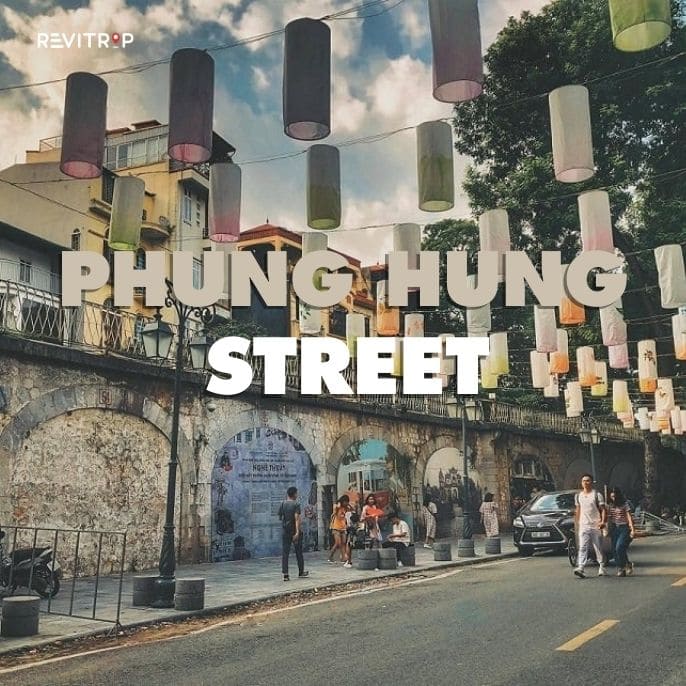
- Phung Hung murals (different but equally photogenic)
- Old Quarter guild streets (Hang Ma is one of the best)
Not quite as essential as:
- Hoàn Kiếm Lake sunrise (quintessential Hanoi)
- Authentic Vietnamese coffee and phở (cultural must-dos)
- Overall Old Quarter wandering (but Hang Ma is a highlight of that)
Best For Different Travelers
Photographers: Non-negotiable. This is one of Hanoi’s best photography locations.
Instagram travelers: Perfect. Colorful, photogenic, shareable content.
Culture seekers: Excellent. Learn about Vietnamese spiritual traditions and festivals.
Families with children: Great. Kids love the colorful displays and lanterns.
Quick visitors (1 day Hanoi): Worth including if time allows after core sights (lake, food).
Extended visitors (2+ days): Absolutely include it.
Final Thoughts: The Alternative That’s Actually Better
Most guidebooks still tell tourists to prioritize Train Street. Meanwhile, Hang Ma Street sits quietly five minutes away, offering everything visitors actually want color, culture, photos, and reliability without the drama.
Stop chasing Train Street. Start with Hang Ma Street instead. Your photos will be better, your experience will be richer, and you’ll avoid the frustration of wasted time and access restrictions.
Sometimes the backup plan is actually the better plan.