Vietnamese etiquette in Hanoi temples during Tet is simple: dress modestly, move slowly, keep your voice low, and observe before you act.
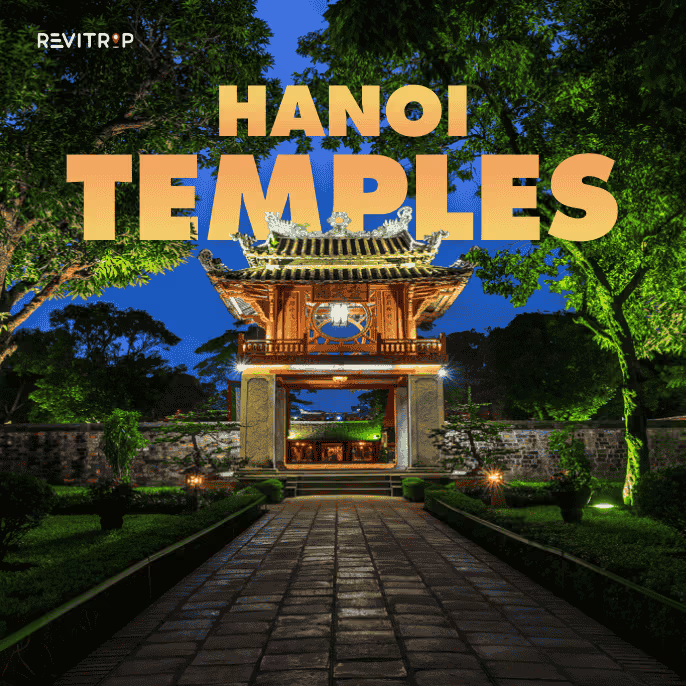
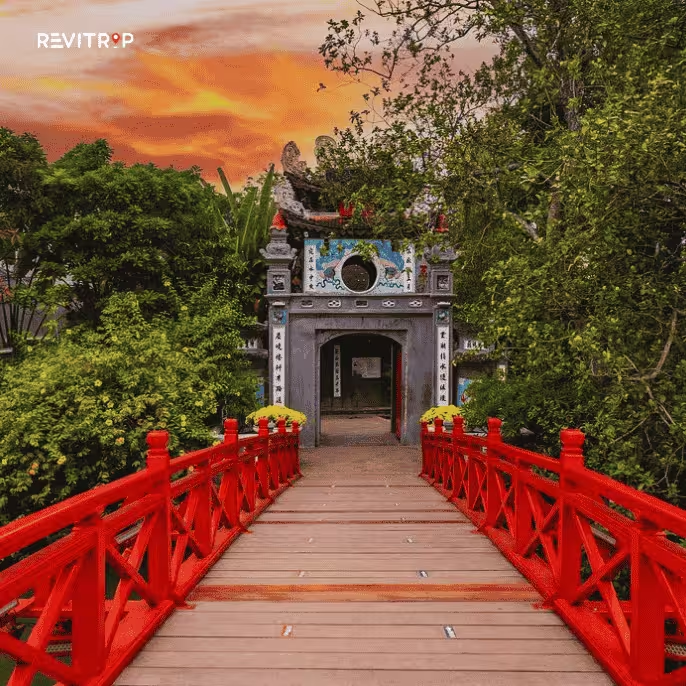
If you’re visiting Hanoi, chances are you’ll step into a temple or pagoda at some point. It might be Tran Quoc Pagoda at sunset, Ngoc Son Temple by Hoan Kiem Lake, or Phu Tay Ho during Tet.
Temples in Vietnam are not just beautiful photo spots. They are active spiritual spaces. Understanding basic Vietnamese etiquette helps you move calmly, avoid small cultural mistakes, and show quiet respect, especially during Lunar New Year.
Quick Rules: Vietnamese Etiquette in Temples
If you only remember five things, remember these:
- Cover shoulders and knees
- Speak softly and move slowly
- Do not walk between someone praying and the altar
- Avoid flash photography in worship halls
- Observe locals before participating in rituals
3 safe defaults when you’re unsure: step aside, lower your voice, and follow the slowest person’s pace.
Why Etiquette Matters in Sacred Spaces
In many countries, religious sites double as tourist attractions. In Hanoi, temples and pagodas are still deeply woven into daily life. People come to pray for health, family harmony, exam results, or a peaceful year ahead.
During Tet (Lunar New Year), visits become more intentional. Locals dress neatly. Offerings are prepared carefully. The atmosphere feels calm but focused.
As a visitor, your role is simple: don’t interrupt the rhythm.
Vietnamese etiquette in sacred spaces is not about perfection. It’s about awareness.
What to Wear: Vietnam Temple Dress Code
The Vietnam temple dress code is simple and consistent across the country.
Dress modestly. That’s the core rule.
- Cover your shoulders.
- Cover your knees.
- Avoid tight, sheer, or beach-style clothing.
- Tank tops, crop tops, and very short shorts are not ideal. Sandals and sneakers are fine, as long as the overall look is tidy.
If you’re unsure, bring a light scarf or overshirt. It instantly makes your outfit appropriate.
A simple test: if it feels like beachwear, it’s probably not temple-friendly.
Shoes, Movement, and Body Language
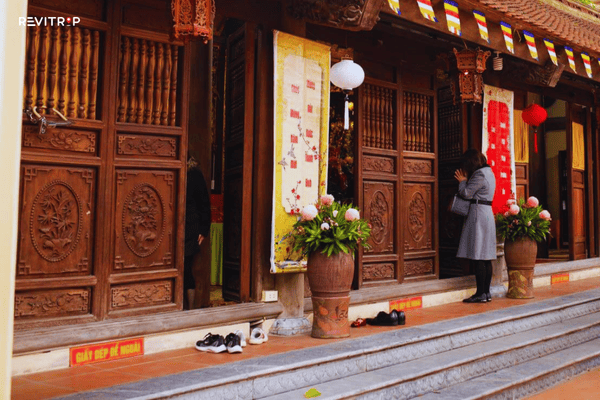
Some inner halls require you to remove shoes. If you see footwear lined up outside, remove yours before entering.
In worship halls, it’s also a respectful default to:
- Remove hats and sunglasses
- Keep phones silent
- Avoid pointing your feet toward altars when seated
Inside worship areas:
- Move slowly
- Keep your voice low
- Avoid standing directly in front of someone praying
- Don’t walk between a person and the altar
Never touch statues, offerings, or sacred objects. Even if others appear relaxed, follow the most respectful behavior you see.
Incense and Offerings: Observe First
You are not expected to participate in rituals.
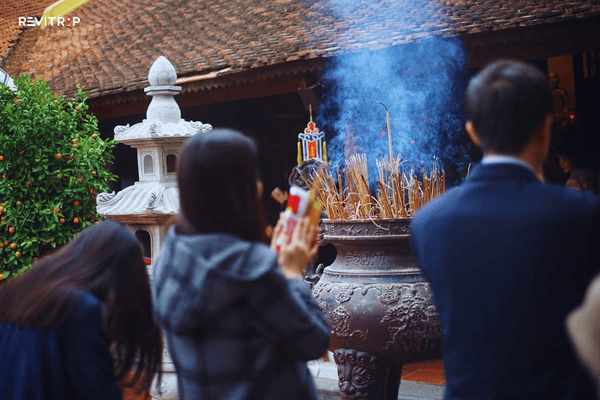
If you choose to light incense, keep it minimal. Take a small number of sticks and follow how locals place them. Do not turn the moment into a photo opportunity.
Offerings are typically brought by locals. As a tourist, quiet observation is enough. Standing respectfully is already participation.
Photography Etiquette in Vietnam Temples
Temples and pagodas are beautiful, especially during Tet. But photography needs restraint.
Avoid:
- Flash inside prayer halls
- Close-up shots of people praying
- Dramatic poses in front of altars
- Loud video commentary
Wide architectural shots are usually fine in outdoor areas. If you are unsure, lower your camera and observe first.
Respect always comes before content.
Temple Visits During Tet Holiday
During Tet, temples and pagodas become busier and more focused. You’ll notice larger crowds, more formal outfits, and people moving more slowly as they take time to pray.
Even if the streets outside feel festive, worship halls remain quiet:
- Keep your voice low
- Don’t rush in for photos
- Don’t block entrances or incense areas
If someone offers a small lucky gesture, accept it with both hands and a simple smile.
During Tet, Vietnamese etiquette is less about rules and more about moving with calm intention.
FAQ
The Vietnam temple dress code is simple: cover your shoulders and knees, avoid tight or see-through clothing, and skip beachwear. Sandals and sneakers are fine, but outfits should look neat and modest. When in doubt, bring a light layer to cover up before entering the main worship hall.
The Vietnam temple dress code for men requires a shirt with sleeves and shorts or pants that cover the knees. Avoid tank tops, sleeveless gym shirts, or very short shorts. Closed shoes or sandals are both acceptable, as long as your overall appearance is respectful and tidy.

Casey is a Vietnam-based travel writer focuses on helping international travelers move through Vietnam with clarity and confidence. The guides here are practical, experience-first, and written for international travelers, built from real time on the ground in Hanoi, Ho Chi Minh City, and across Vietnam. Expect clear, no-fluff advice that helps you move around smoothly, stay safe, and avoid the usual tourist headaches.