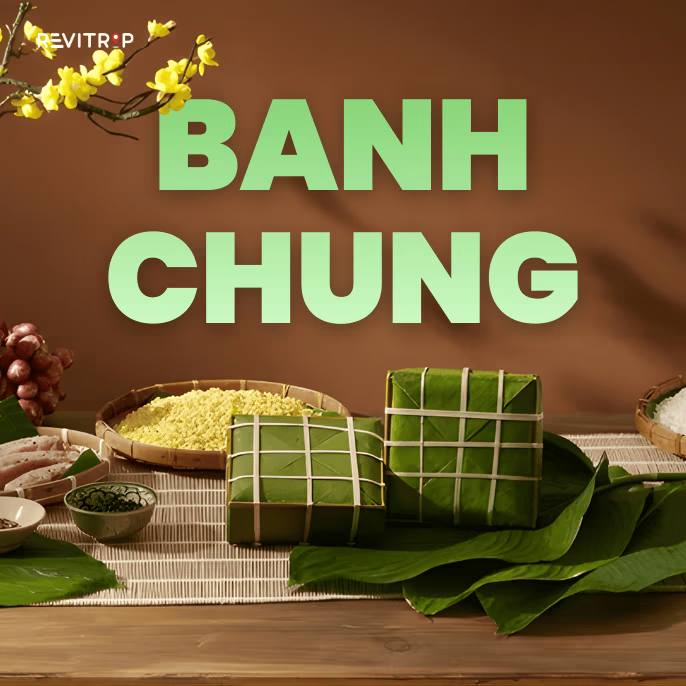
When the Chung cake aroma fills Vietnamese homes each winter, you know the Lunar New Year has arrived. This humble square parcel wrapped in green leaves is more than seasonal food. It carries thousands of years of cultural heritage. It reflects family bonds and spiritual devotion at the heart of Vietnam’s most cherished celebration.
For visitors exploring Vietnam during Tet festivities, understanding this traditional delicacy opens a window into the soul of Vietnamese culture. Unlike typical holiday treats found worldwide, Chung cake carries profound symbolic meaning while delivering an unforgettable taste experience that has captivated generations.
What Makes Chung Cake (Banh Chung) Special?
The beauty of this traditional Vietnamese dish lies in its elegant simplicity. Picture a perfectly square package bound with bamboo strips, its green dong leaves concealing layers of sticky rice, golden mung beans, and savory pork. Each component tells a story.
Vietnamese families prepare this ceremonial food with reverence and joy. The square shape isn’t arbitrary – it represents the Earth itself in ancient Vietnamese cosmology. Every bite connects you to agricultural roots, reminding everyone of the land’s generosity and the ancestors who cultivated it.
This symbolic food serves dual purposes during Lunar New Year celebrations. Families place it on ancestral altars as sacred offerings, then share it together as a communal meal. Making and eating Chung cake becomes a quiet ritual – one that honors the past while feeding the present.
Chung Cake – the legend behind
The Ancient Legend Behind Vietnam’s Iconic Dish
Historical tales surrounding Chung cake date back approximately 4,000 years to the Hong Bang Dynasty. The story begins with an aging king facing a difficult decision about succession among his twenty-one sons.
The 6th Hung King announced a unique competition. Whichever prince created the most meaningful dish would inherit the throne. Most brothers traveled far seeking exotic ingredients and elaborate recipes to impress their father.
Prince Lang Lieu, the eighteenth son, lacked wealth for such extravagance. Instead, he created two humble cakes using ingredients ordinary farmers knew well. His square cake symbolized Earth, while his round cake represented Heaven.
The simplicity and symbolism moved the king deeply. Lang Lieu’s Chung cake demonstrated that true value comes from thoughtfulness and cultural understanding rather than luxury. The prince became king, and his creation became inseparable from Lunar New Year traditions.
Ingredients That Tell Vietnam’s Story
Creating authentic Chung cake requires specific components that reflect Vietnamese agricultural life. Each ingredient plays an essential role in achieving the characteristic flavor and texture.
Glutinous rice forms the foundation. This sticky variety, different from everyday rice, creates the cake’s distinctive chewy consistency. Farmers harvest it specially for festive occasions.
Mung beans provide the golden middle layer. Split and soaked until soft, they bring subtle sweetness that balances the savory elements beautifully.
Fatty pork belly adds richness. Marinated with fish sauce, shallots, pepper, and salt for several hours, the meat infuses every bite with umami depth.
Dong leaves are perhaps the most crucial element. These large, aromatic leaves impart a unique fragrance and natural green tint to the rice. They also serve as the wrapper, holding everything together during the lengthy cooking process.
Bamboo strings complete the package. Soaked in water beforehand, they tighten around the cake, maintaining that perfect square geometry through twelve hours of boiling.
The Art of Crafting This Traditional Treasure
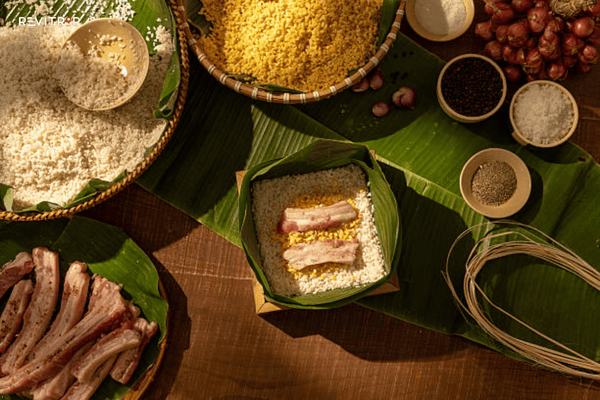
Chung Cake – the ingredients
Making Chung cake is not quick work. Families typically dedicate an entire day to the process, with preparations beginning the previous evening. This time investment strengthens family bonds through shared labor.
The rice and beans must soak overnight. This softens them sufficiently for the long boiling ahead. Meanwhile, the pork marinates, absorbing flavors that will permeate the finished product.
Assembly requires skill and patience. Some families use wooden molds to get the signature square shape. More experienced cooks can wrap it neatly with just their hands. Typically, people lay out four or five dong leaves in a cross pattern.
The layers follow a clear sequence. First, glutinous rice forms the base. Next, mung beans make the first filling layer.
Place the marinated pork in the center, then cover it with another layer of mung beans. Finally, more glutinous rice seals everything on top.
Wrapping demands precision. The leaves fold around the layered ingredients, and bamboo strings bind the package tightly. The wrapping must be secure enough to survive twelve hours of boiling without unraveling. It must not be so tight that it prevents proper cooking.
The boiling stage tests patience. Large pots simmer over fire for ten to twelve hours straight. Someone must tend the fire constantly, maintaining steady heat. During this time, the ingredients meld together, transforming into a cohesive, sticky, savory masterpiece.
Recognizing Quality in Chung Cake
Distinguishing excellent Chung cake from mediocre versions requires knowing what to look for. Weight matters – a good cake feels substantial and dense in your hands, indicating proper ingredient ratios and thorough cooking.
Shape reveals craftsmanship. While perfect geometry is nearly impossible, skilled makers produce cakes with sharp corners and even sides. Lopsided or lumpy cakes suggest rushed or careless preparation.
Aroma provides immediate feedback. When unwrapped, quality Chung cake releases the distinctive fragrance of dong leaves combined with savory, slightly sweet undertones. This smell should be inviting, never sour or off-putting.
The color should be uniformly pale green throughout the rice portions. Uneven coloring or white patches indicate inadequate cooking time or poor leaf coverage during preparation.
Texture tells the final story. Cutting into the cake should reveal sticky but distinct rice grains surrounding smooth, creamy mung bean layers. The pork should be tender and well-integrated, not dry or separated from surrounding ingredients.
Taste confirms quality. Every element – rice, beans, meat – should be distinguishable yet harmonious. The dong leaf flavor should enhance, not overpower. A balanced cake leaves you satisfied but ready for another slice.
How Vietnamese Families Enjoy Their Festive Food
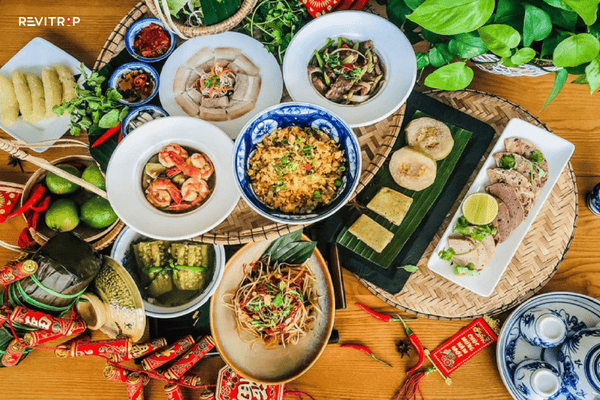
Chung Cake – An indispensable dish on the New Year’s Eve dinner table.
Lunar New Year celebrations wouldn’t feel complete without Chung cake on the table. Families make at least five or six cakes.
This ensures enough for altar offerings, gifts for relatives, and food at home during the holidays.
Serving methods vary based on preference and occasion. Many Vietnamese enjoy it at room temperature, sliced into thick pieces and accompanied by vegetable pickles. The tangy, crunchy pickles cut through the rich, dense cake beautifully.
Adding sweetness creates another popular combination. Drizzling molasses or sprinkling sugar over slices balances the savory flavors. This sweet-savory contrast epitomizes Vietnamese culinary philosophy.
Frying transforms leftover Chung cake into an entirely different experience. Sliced thin and pan-fried until crispy, the exterior develops a golden crunch while the interior remains soft. Sweet chili sauce makes an excellent dipping accompaniment for fried versions.
Refrigeration extends shelf life significantly. Properly stored cakes stay safe to eat for weeks. This lets families enjoy this traditional food after Lunar New Year ends. Reheating in the microwave or steaming revives the original texture and warmth.
The Deeper Meaning of Making Chung Cake Together
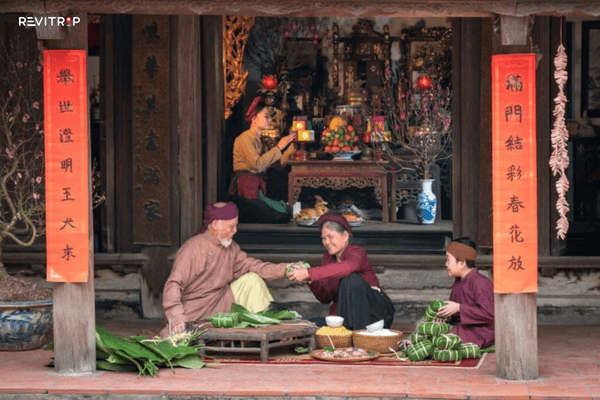
Beyond taste and tradition, Chung cake preparation creates irreplaceable family moments. The lengthy process naturally brings multiple generations together for extended periods, fostering conversation and connection that modern life often discourages.
Grandparents pass down techniques to grandchildren during these sessions. Demonstration, rather than instruction, transmits the proper way to fold leaves, tie strings, and layer ingredients. This hands-on learning preserves cultural knowledge more effectively than any written recipe.
Stories flow freely while hands stay busy. Elders share memories of previous Lunar New Year celebrations. They recall relatives no longer present, keeping their spirits alive through storytelling. Younger family members gain perspective on their heritage and identity.
The overnight fire-tending creates special bonding time. Family members take shifts watching the boiling pots, ensuring consistent heat. These quiet nighttime hours, punctuated by conversation and the fire’s crackling, become cherished memories.
When the cakes finally finish cooking, unwrapping them together becomes a small ceremony. Everyone gathers to assess the results, celebrating successful cakes and laughing about imperfect ones. Success or failure matters less than the shared experience.
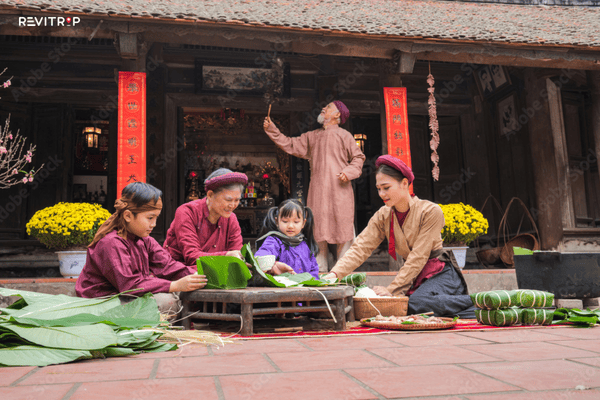
Chung Cake – Making chung cake together
Where Travelers Can Experience This Cultural Icon
Visitors to Vietnam during Lunar New Year season will encounter Chung cake everywhere. Markets, street stalls, and restaurants throughout the country offer both traditional and fried versions to curious travelers.
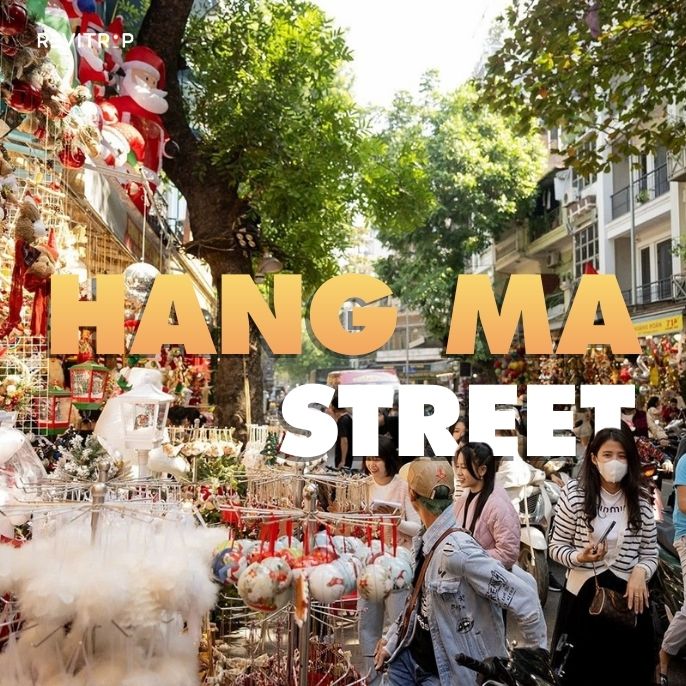
Hanoi’s Old Quarter becomes particularly festive. Vendors set up temporary stalls selling freshly made cakes alongside other Tet specialties. Walking these historic streets, you’ll see families carrying their homemade cakes wrapped in banana leaves as gifts for relatives.
Nha Trang and Phu Quoc, though beach destinations, embrace traditional Tet foods with equal enthusiasm. Resort restaurants often feature Chung cake on special menus, sometimes with contemporary presentations that maintain authentic flavors.
Hoi An’s ancient town provides atmospheric settings for tasting this cultural treasure. Small family-run eateries serve it with other regional specialties. Owners often happily explain its meaning and how they make it.
Pricing remains remarkably affordable. A complete Chung cake typically costs between 40,000 and 80,000 Vietnamese dong (approximately $1.50-$3.50 USD).
Fried slices cost even less, usually 10,000 to 30,000 dong. This makes it an easy cultural experience for budget travelers.
Some cooking schools and cultural centers offer Chung cake making workshops for tourists. These hands-on experiences take less time than the traditional process. They also help you better appreciate how much skill and patience it takes.
Planning Your Visit During Lunar New Year
Experiencing Chung cake in its proper cultural context requires strategic travel planning. The Lunar New Year date changes each year because it follows the lunar calendar. It usually falls between late January and mid-February.
Book accommodations months in advance. Vietnam’s Tet holiday triggers massive domestic travel, with families returning to ancestral villages. Hotels and resorts in tourist areas fill quickly, and prices increase significantly during peak periods.
Understand that many businesses close for several days. While tourist spots stay open, local markets and small restaurants often close.
Owners do so to celebrate with family. This affects dining options and shopping availability.
Transportation becomes challenging. Trains, buses, and domestic flights sell out weeks ahead. Book tickets as early as possible if your travel dates coincide with the holiday period.
The weeks leading up to Tet offer the best balance. Markets bustle with preparation activities, families make Chung cake together, and festive decorations appear everywhere. You’ll witness cultural practices without facing the closures and crowds of the actual holiday days.
Why Chung Cake Matters Beyond Food
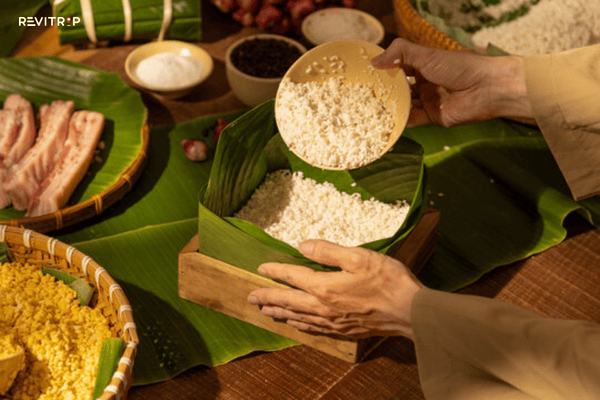
Chung Cake – Why Chung Cake Matters Beyond Food
Calling Chung cake merely a dish undersells its cultural significance dramatically. This traditional creation embodies Vietnamese identity, agricultural heritage, and spiritual beliefs in edible form.
The preparation ritual reinforces family structures and intergenerational knowledge transfer. Young people learn patience, precision, and respect for tradition through the meticulous process. These lessons extend far beyond cooking skills.
Offering Chung cake to ancestors demonstrates core Vietnamese values of gratitude and filial piety. The practice acknowledges that current prosperity stems from previous generations’ sacrifices and hard work.
Sharing cakes with neighbors and extended family strengthens community bonds. This gift-giving tradition builds social networks that support people throughout the year, creating resilience within Vietnamese communities.
Environmental consciousness lives within Chung cake traditions too. The use of natural materials—dong leaves, bamboo strings – reflects sustainable practices that modern food packaging has largely abandoned. These biodegradable components return harmlessly to the earth.
Your Invitation to Vietnamese Culture
Chung cake opens doors to understanding Vietnam that no guidebook fully captures. Tasting it during your visit helps you feel connected to this culture.
It links you to centuries of tradition.
It also brings to mind family gatherings and spiritual practices.
Whether you try it at a street stall, enjoy it in a restaurant, or join a workshop, treat this traditional food with respect. Each bite carries history, symbolism, and the love of families who prepared it.
The Lunar New Year season offers unmatched opportunities to witness Vietnamese culture at its most vibrant and authentic. Plan your trip to match these celebrations, and Chung cake becomes more than a food experience. It becomes a cultural bridge that connects you to Vietnam’s soul.
Contact local tourism boards, cultural centers, and cooking schools to arrange authentic Chung cake experiences during your Vietnam adventure. This humble square package wrapped in leaves awaits to share its stories with you.