Every year, as the Lunar New Year approaches, Hanoi transforms. Streets fill with incense. Kumquat trees glow golden on every corner. Millions of Vietnamese people begin one of their most deeply felt traditions, visiting sacred sites to pray for luck, love, health, and wisdom. For anyone exploring Hanoi temples, this spiritual side of the season is not something to watch from a distance. It is something to step into, with curiosity and respect.
Hanoi’s temples and pagodas stretch from the mist-covered shores of West Lake to the ancient stone paths of the Temple of Literature. They hold centuries of devotion. Whether you travel for culture or for personal blessing, these are the places where the new year truly begins.
Why Hanoi During Tet Holiday Is a Spiritual Journey
Tet, the Vietnamese Lunar New Year, is far more than a celebration. It is a spiritual threshold. In Vietnamese belief, the days surrounding Tet rank among the most auspicious of the entire year. Prayers offered now carry amplified weight. Intentions set now shape the months ahead.
That is why Hanoi temples and pagodas draw enormous crowds in the days just before and after the new year. These are not tourists filling the courtyards. These are locals, carrying trays of fruit, bundles of incense, and hearts full of hope.
The rituals here do not play out for an audience. They are earnest, intimate, and often deeply moving. For visitors, this is a rare window into living Vietnamese culture at its most sincere.
Tay Ho Temple: Hanoi’s Most Sacred Tet Temple
If one destination defines spiritual pilgrimage in Hanoi during Tet Holiday, it is Tay Ho Temple, the Palace of the West Lake. This temple honors the Mother Goddess Liễu Hạnh, one of the Four Immortals of Vietnamese folk religion. It sits on a peninsula that juts into Hồ Tây (West Lake), with shimmering water on three sides.
Tay Ho Temple stands as the most important site of Mother Goddess worship in northern Vietnam. Locals call this tradition Đạo Mẫu. At Tet, the energy here is electric. Thousands of worshippers cross the narrow causeway with arms full of offerings, sticky rice, incense sticks, paper votive goods, and elaborate fruit arrangements. Smoke and flowers fill the air. Prayers rise from inside the red-lacquered halls.
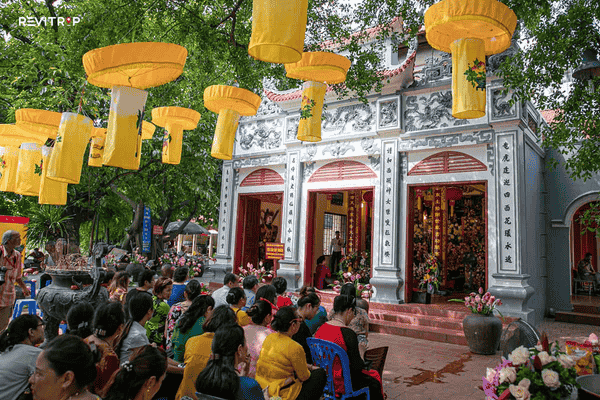
Arrive early on the first three days of Tet to see devotion at its fullest. The lake views at dawn are breathtaking. The atmosphere, solemn, joyful, communal, is unlike anything else in the city. Respectful visitors may enter, observe, and light a stick of incense.
Tran Quoc Pagoda: Hanoi’s Oldest Buddhist Site at New Year
Tran Quoc Pagoda stands on a small islet in West Lake. It is the oldest pagoda in Hanoi, with roots dating to the 6th century under Emperor Lý Nam Đế. Its eleven-tiered stupa reflects in the still water below, one of the most iconic images in Vietnam.
At Tet, Tran Quoc becomes a center of Buddhist pilgrimage. Worshippers come to pray for peace, health, and good fortune. The monks hold special Tet ceremonies, and incense smoke drifts across the lake’s surface throughout the day.
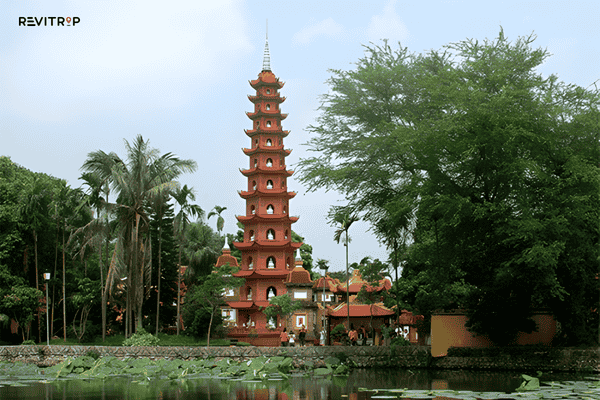
Among Hanoi pagodas, Tran Quoc holds a unique place because of its age, its beauty, and its role as a spiritual guardian of the city. In the 17th century, the Red River threatened its original grounds. The community relocated the pagoda to its current island, and it has watched over Hanoi ever since.
A visit at dawn or dusk offers one of the most peaceful experiences in the city. The mix of Buddhist ceremony, natural beauty, and deep history makes Tran Quoc one of the essential Hanoi temples for any Tet trip.
Quan Su Pagoda: The Buddhist Heart of Hanoi
In central Hanoi, just a short walk from Hoan Kiem Lake, Quan Su Pagoda serves as the headquarters of the Vietnam Buddhist Sangha, the national Buddhist governing body. This makes it one of the most active religious centers in the country.
During Tet, Quan Su becomes a focal point for Buddhist worship across the capital. The main hall fills with devotees. Monks lead chanting ceremonies that carry through the courtyard and into the surrounding streets. Bells and wooden prayer instruments mix with incense clouds, creating deep calm in the middle of the city’s festive noise.
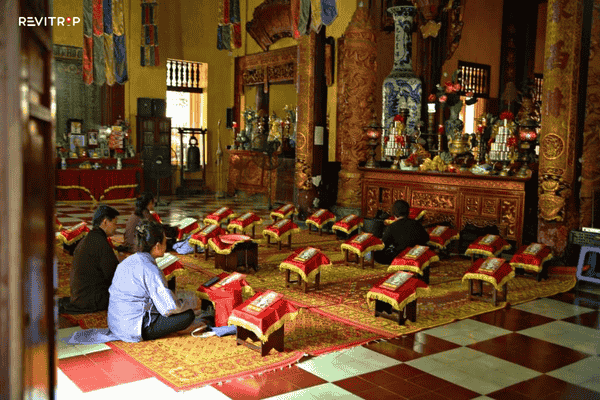
What sets Quan Su apart from other Hanoi pagodas is its central role in everyday urban religious life. This is not a preserved landmark. It is a living place of faith that Hanoians return to year after year, especially at the Lunar New Year.
Visitors should wear modest clothing. Move quietly. The space holds active worship, and respectful behavior matters here.
Ha Pagoda: The Go-To Hanoi Temple for Love and Romance Prayers
Among all Hanoi temples visited at Tet, Ha Pagoda holds the most tender purpose. Located in the Cau Giay ward, this pagoda, formally known as Thánh Chúa Pagoda, draws thousands of people seeking blessings in matters of the heart.
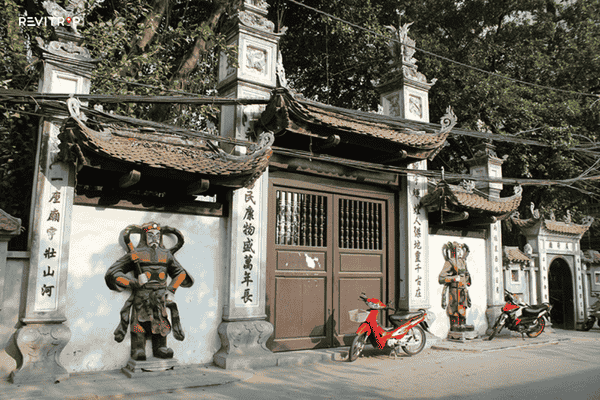
The tradition is called cầu duyên, praying for a destined partner or for a relationship to grow. Single visitors come hoping to find love. Couples come to pray for lasting happiness. Those already blessed often return to give thanks.
The ritual is simple and sincere. Worshippers bring flowers, incense, and small cakes. They kneel before the main altar and speak their prayers quietly. Young office workers, university students, couples of all ages, all placing their hopes for connection into something larger than themselves.
Ha Pagoda feels especially alive during Hanoi’s Tet Holiday. The courtyard fills quickly. Incense smoke rises in tall columns. The atmosphere hums with earnest hope. It is one of the most distinctly Vietnamese spiritual experiences a visitor can have.
Temple of Literature: Hanoi Temple for Academic Blessings
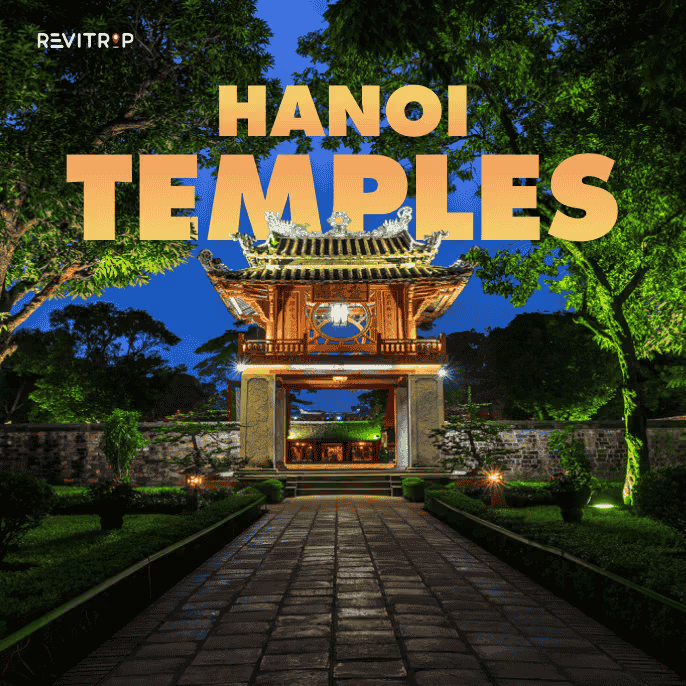
No guide to Hanoi during Tet Holiday is complete without the Temple of Literature. Founded in 1070 under Emperor Lý Thánh Tông, this was Vietnam’s first national university. Dedicated to Confucius and the spirit of learning, it stands as one of the finest examples of traditional Vietnamese architecture in the country.
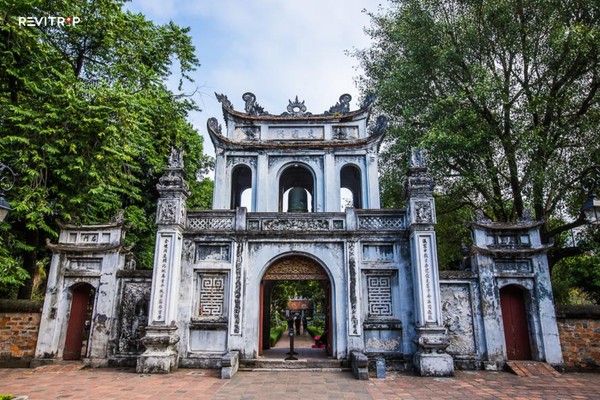
At Tet, students, parents, and scholars gather here to perform xin việc học tập, praying for academic success, strong exam results, and intellectual growth in the year ahead. Stone stelae bearing the names of doctoral graduates from centuries past line the courtyards. Visitors rub the heads of stone tortoise sculptures for good luck in studies, a tradition so old that some tortoises have worn smooth from generations of hopeful hands.
The first days of Tet bring extraordinary energy to Temple of Literature. Red and gold decorations frame the ancient stone gates. Students bow before the altar of Confucius. Families walk the paths together, setting intentions for the months ahead.
Among Hanoi temples open during Tet, Temple of Literature is unique. It bridges the spiritual and the intellectual, reflecting a Vietnamese belief that the pursuit of knowledge is itself a form of reverence.
How to Plan Your Visit to Hanoi Temples at Tet
The first three days of Tet draw the biggest crowds. Popular Hanoi temples like Tay Ho Temple and Ha Pagoda fill up fast. Arrive before 8 a.m. for a quieter visit.
Dress modestly, covered shoulders and knees are expected at all religious sites. Remove shoes before entering main halls where signs ask you to. If you light incense, hold it with both hands and bow slightly. This small gesture of respect goes a long way.
Most importantly, approach each space with openness. These are not museums. Real faith lives here. Real prayers rise from these courtyards every day, and especially at the turn of the Lunar New Year. For the traveler willing to receive that, Hanoi during Tet Holiday offers something rarer than any landmark: a genuine encounter with the spiritual heart of a city.
Conclusion: Hanoi Temples Make Tet Unforgettable
Hanoi during Tet Holiday is a city suspended between worlds, between the old year and the new, between the earthly and the divine, between celebration and prayer. Its temples and pagodas are not relics. They are living places, vibrant with meaning, where millions of people bring their deepest hopes each year.
From the lakeside grandeur of Tay Ho Temple and Tran Quoc Pagoda to the urban devotion of Quan Su, the love prayers of Ha Pagoda, and the scholarly reverence of Temple of Literature, Hanoi’s temples and pagodas offer a spiritual journey as rich as the city itself. Visit them at the new year. You will understand Hanoi, and perhaps yourself, more deeply.
FAQ:
They are the Bach Ma Temple guarding the East, the Voi Phuc Temple guarding the West, the Kim Lien Temple guarding the South, and the Quan Thanh Temple guarding the North.
In this Hanoi Temple Guide
- Temple of Literature.
- Ngoc Son Temple, Hoan Kiem Lake.
- One Pillar Pagoda.
- Quan Thanh Temple.
- Tran Quoc Pagoda.
While Vietnam doesn’t enforce a strict dress code, modesty is very much appreciated, particularly in Northern Vietnam and more traditional or rural areas. When visiting religious sites such as temples and pagodas, it’s important to cover your shoulders and knees. That means shorts and mini skirts are a no-go